
When chef and writer Jess Eng tried pitching her first story about Taitung, Taiwan, no one wanted it.
This was around 2022 and the story was about the Luye Red Oolong, a bug bitten tea with a honey-sweet flavor. Its naturally occurring honey-like sweetness comes from a biological defense from the leaves being nibbled on by small green leaf hoppers. Eng was a younger, greener freelance writer at the time and she received a response that many writers received at the time, your topic is too niche.
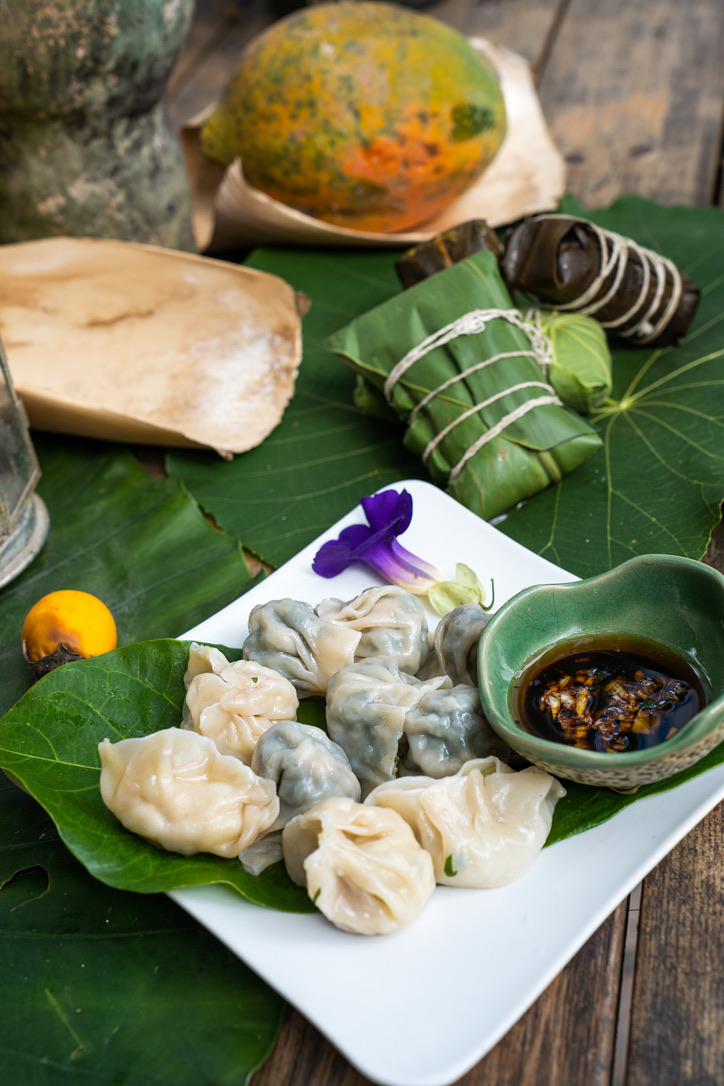
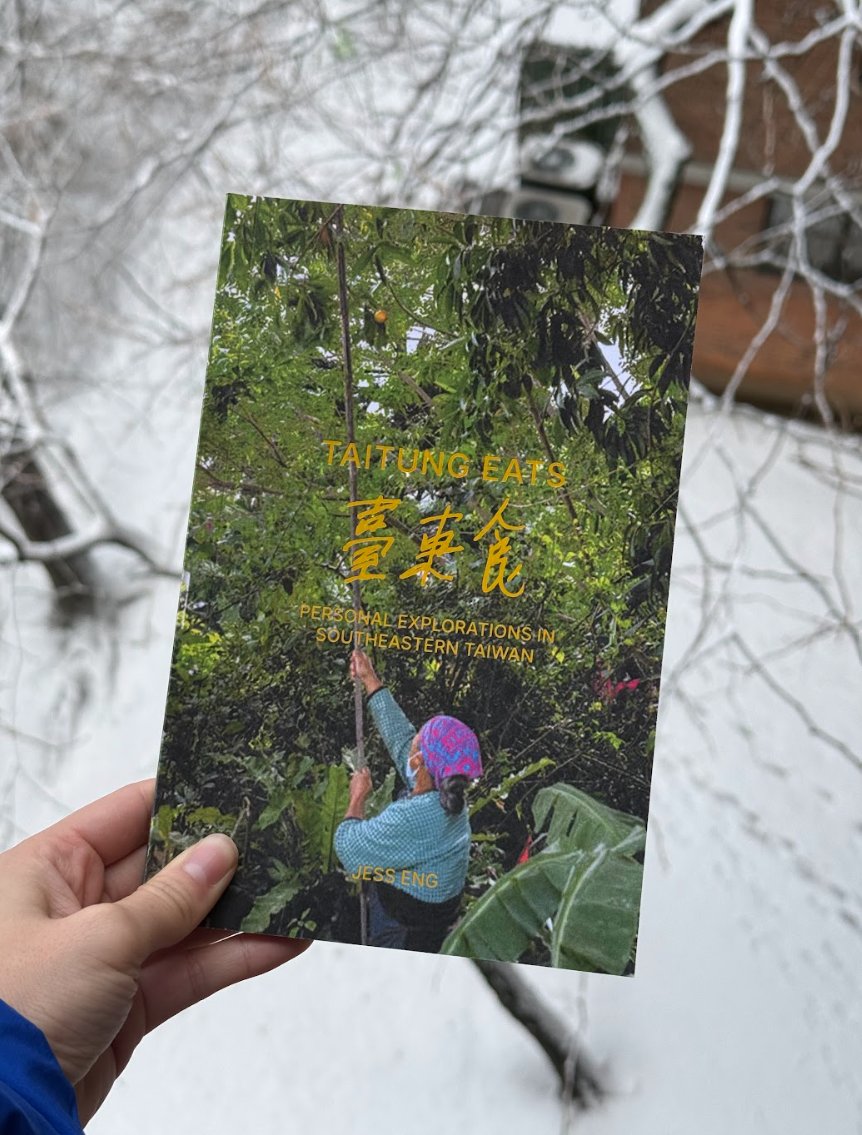
She had already spent hours with growers and tea experts who generously offered their time and knowledge. She couldn’t shake the feeling that she had to find a home for this story. Three years later, that feeling led to an entire self-published book exploring the unique dishes and flavors of Taitung. In “Taitung Eats: Personal Explorations in Southeastern Taiwan”, Eng takes us along Taiwan’s southeastern coast by way of ten dishes and the people who make them. The book contains English-language essays and a compilation of photos taking us through the culinary traditions and flavors of Taitung, Taiwan highlighting old style dishes like Mama Huang’s daikon soup and elements of Indigenous foodways like the different culinary uses for millet.
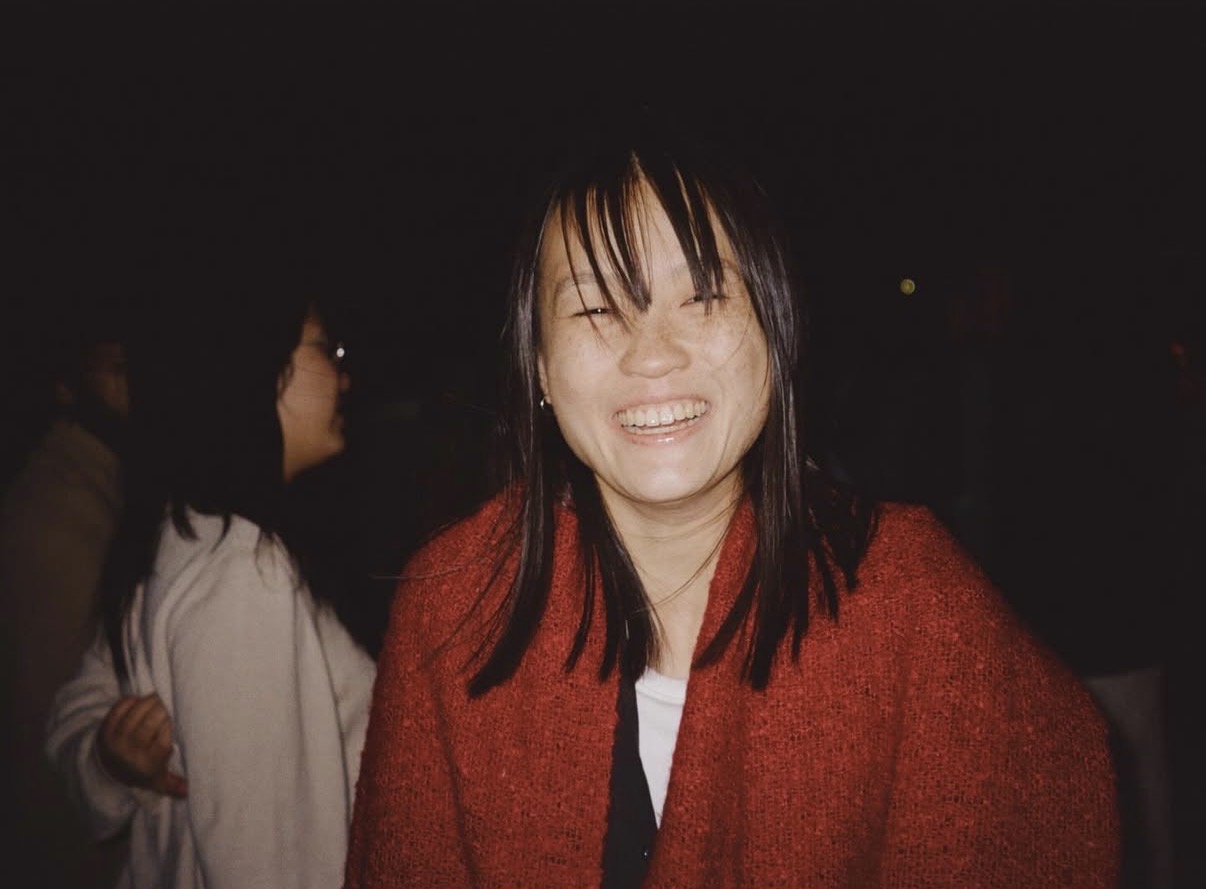
Since her days of pitching the original Taitung story, Eng’s writing has appeared in the Washington Post, New York Times, TASTE Magazine, Eater, NPR, and Atlas Obscura. She sat down with me to talk about her winding road from studying folklore and mythology at Harvard to exploring the farmlands of Taitung.
Interview has been edited for brevity and clarity.
Tiffany: I’ve seen you post photos of your dinner parties and private suppers out of your Brooklyn apartment. Were you cooking before you got into food writing or did the writing part come first and the interest in food came later?
Jess: Well I came to New York with no job and no plans, and I figured, okay, I’ll be a line cook—I want to understand food and be good at it. It takes a long time to become a great cook. But I’ve had two knee surgeries, so standing for long periods isn’t great for me. I ruled it out.
So I thought, I need to pick up the pen again. I found a social media job at Fly By Jing—through LinkedIn, one of the four days a year I scroll it. I came in when they already had a big presence, in Target and Whole Foods, and my job was to get their TikTok up and running. I was the sole content creator for a long time. I never thought I would get into marketing, but my reasoning was: if I’m going to be a food writer today, knowing how to make a video is an essential skill.
They let me freelance at the same time, which was great. I was doing restaurant openings, and I did these “Is It Worth It?” videos for Eater—that’s where the stinky tofu one came from. Those assignments were the kind where you think, I can’t believe I’m getting paid to do this.
Tiffany: That’s an interesting series of pivots coming off a Folklore and Mythology major at Harvard. Was your focus always on the Asian diaspora?
Jess: Honestly, none of my first assignments were about Asian food or the Asian diaspora, even though that’s my beat these days. And I’m not specifically a Chinese food writer or a Taiwanese food writer—I’m interested in diaspora cooking and immigration stories.
My first article was actually more aligned with my college major. I was looking a lot at ancient Egypt and ancient Mesopotamia. A lot of times we look at history and say, okay, that’s where written culture and language start, but actually it goes back to oral traditions. I really identified with that, because food often isn’t considered sophisticated art, not in regular circles. Maybe fine dining is. But we don’t really treat it as something worth studying at a scholarly level.
I was interested in interviewing home cooks, not fancy chefs. It’s this folk art, and you’re hearing the histories in their own words instead of layering your own biases on top. That’s what led me to the major. I loved it way more than striving for a good grade in a math class.
Tiffany: So how did Taitung enter the picture?
Jess: I’m third generation, so most of my family is in the U.S. Growing up, I never went to Asia. My first time was 2017, on a program from San Francisco State to Beijing, and after that I decided I needed to go back every year. The next year I taught English in Japan. The year after that I went on a leadership program through the Taiwanese American Association connected to National Taiwan Normal University, and almost all the program leaders were Taiwanese American. I got really close to them.
One of my best friends from that program moved to Taiwan after college, which is pretty unheard of, and instead of Taipei she chose Taitung. So when I graduated with no job plans, I went to visit her. She’s one of the most adventurous people I know, and she was busy with her job. I was often on my own, talking to vendors.
I realized, “Wait, there’s an actual food movement here.” There’s a slow food movement in Taitung; stronger than anywhere in the U.S. I’ve been. They make pamphlets, and the pamphlets are translated into English. I’m thinking, who is coming to Taitung and doing this? They have this built-out infrastructure for learning about local cuisine and culture, and I hadn’t seen that, even in Taipei. So I stayed in touch, got connected to a few people through the university, and that’s where it started.
Tiffany: For readers who may not know how Taiwanese food shifts from one region to the next—what makes Taitung distinctive?
Jess: I noticed it before I ate anything. I’m from SF, where you know you’ve arrived because every billboard is an AI billboard. Riding into Taitung, I was watching the billboards change; the politicians were different, and people were proudly wearing the colors of their Indigenous tribe. You don’t see that on the western side of Taiwan nearly as much. Honestly, you don’t see it in the U.S. either. I have friends who are proud tribe members here, and it’s just not talked about the same way.
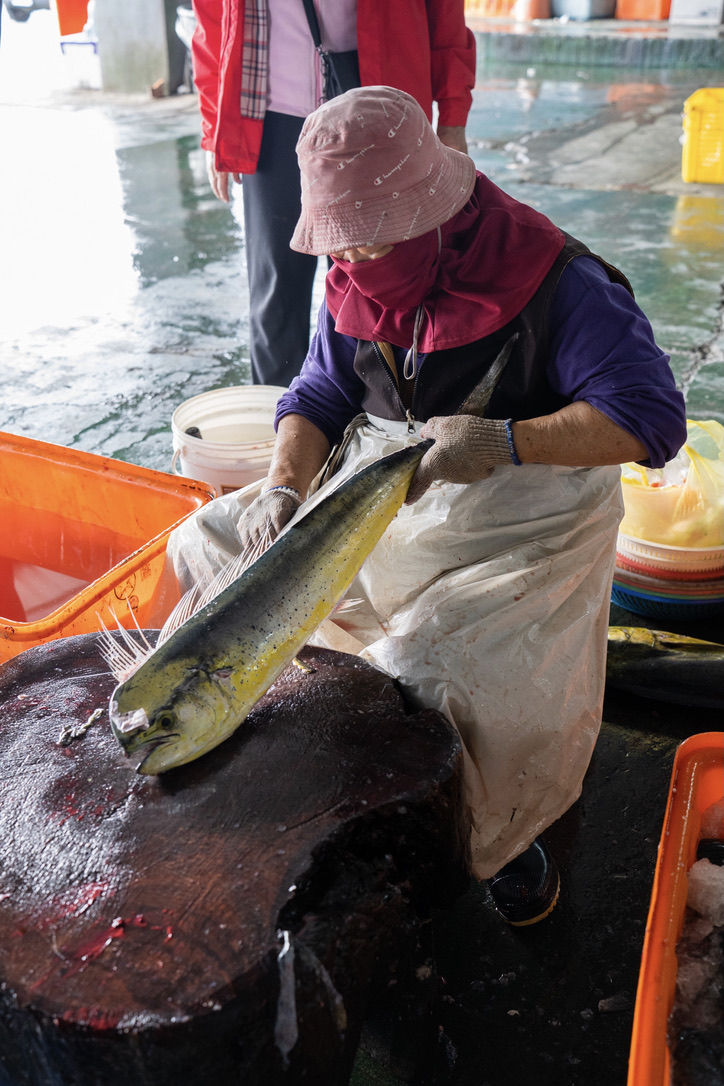
Then the food veers toward locally foraged ingredients and Indigenous flavors. That’s what I wanted to highlight, partly because my Taiwanese friends didn’t know much about it either, and partly because I grew up in cities. I was so divorced from my food and from the land that going to Taitung was a dramatic shift. That led me to a ton of Indigenous chefs and restaurants.
Tiffany: Would you say Indigenous communities are spearheading the slow food movement there?
Jess: It’s a mix. The slow food pamphlets—they put out a new one most years—include Indigenous, Hakka, and other local people. It can be someone of Han ancestry experimenting with local ingredients, or an Amis chef working in a fine dining setting. Nothing is fixed, which I love about the area.
Being a bit of a historian helps, because so much has happened to Taitung. One village I went to was under Japanese occupation in the early 20th century, and you can tell because the roads intersect in parallel lines. Go to a neighboring village and the roads are diagonal, more askew, and the food reflects that too. They use more seaweed. Those were things I had to learn on my own, sometimes long after an interview, when someone had told me subtly and I hadn’t understood.
That’s why I’m glad I didn’t publish immediately. I had to sit on it. I read Clarissa Wei’s book, some of “A Culinary History of Taipei”, and I found a bookstore in Taitung with these gorgeous local magazines, designed in that very Taiwanese aesthetic, cute and fun, but about serious things like passing down heritage and preserving Indigenous food. You can’t find them in the U.S. I don’t think I could have done this research without that bookstore and the university library.
Tiffany: Did you have help with the language and the access?
Jess: Completely. My friend Chihyin Chen became the project’s fixer and translator, and she did her master’s at National Taitung University so she knew that history and had taken those classes. This would not have happened without her. It’s a self-funded project; a grant here and there, so it was bootstrapped. It wasn’t, “I’ve hired a researcher.” It was, “Hey, we’re friends, and we’re doing this.”
Tiffany: You went the self-publishing route. What did you learn?
Jess: That it takes time, and that’s not a bad thing. Sitting on the material let me do more research into the history and get more interviews. If a pitch gets rejected as too niche, maybe it just isn’t the trend of the moment. But if it feels relevant to you, and you think people should know about it, then self-publishing or getting it out into the world your own way is the way to do it.
The practical stuff is its own education. I thought the book was going to be a lot smaller, but my designer made the margins big, so it ended up bigger; it looks nice, and the font is large enough that you’re not straining, but it’s more expensive to print as a result. I’m taking orders through a Google Form, very bootstrapped, because when you’re selling one item everything is expensive. Somebody quoted me $12 to ship a book. I got it under $5, which felt like a real victory.
Tiffany: What’s the most memorable thing you ate on this journey?
Jess: That’s why the book is the way it is. I couldn’t pick one thing, so I put in ten. But if I had to choose, it would be learning about millet. It’s not really a dish so much as a crop. Almost every Indigenous group I talked to—Bunun, Rukai, Amis—were using millet in some way, whether in a sticky rice preparation or for making wine.
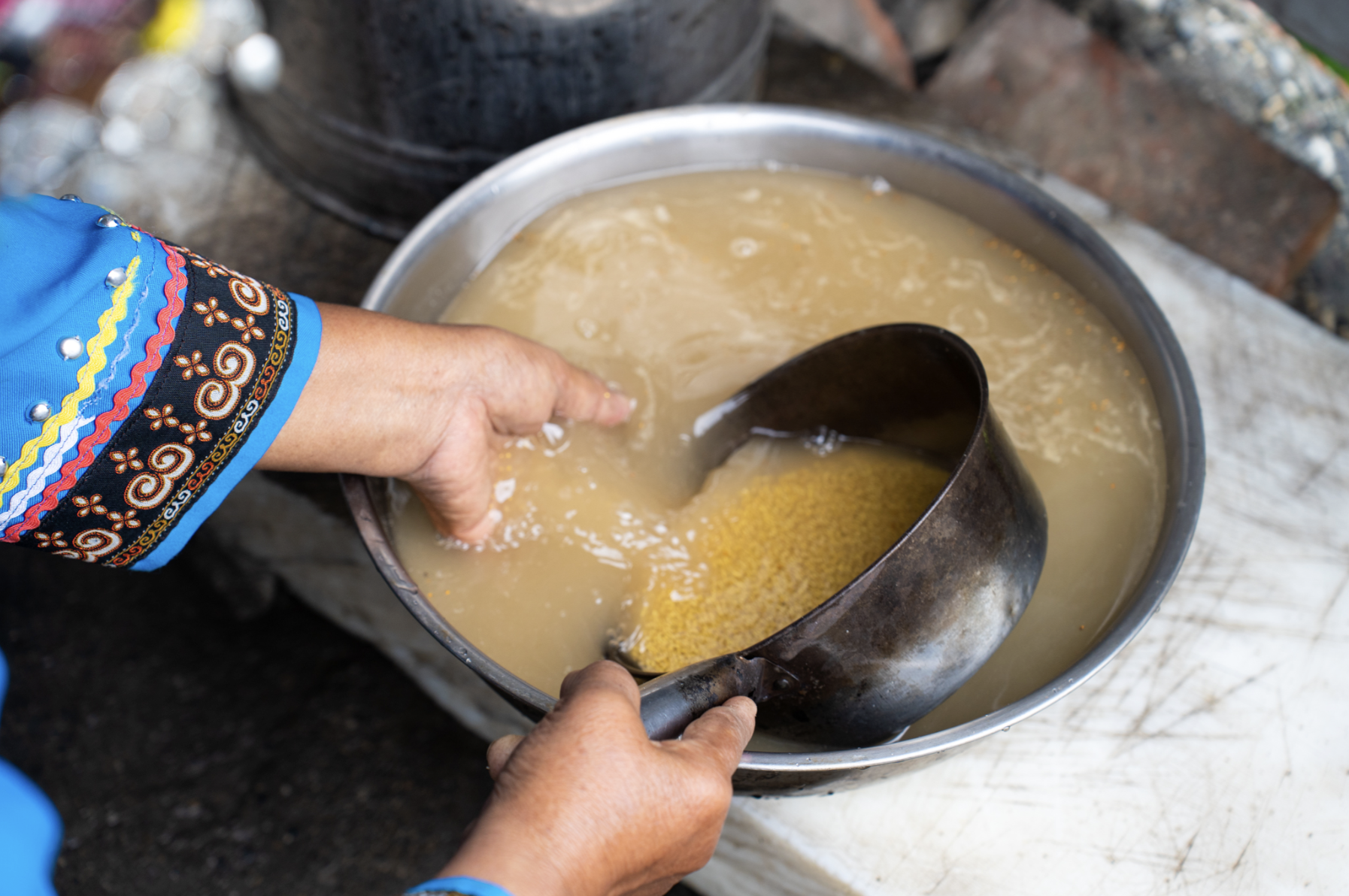
The most memorable experience is one of the essays. She picked the millet from her garden, which was wild to me. We don’t go pick wheat here. Then she washed it in a pan—usually we’re rinsing rice to remove starch, and here she’s telling me, there’s dirt on it, you have to get the rocks out. Then she added it to a huge wok over a fire pit and massaged it with something that looked like a canoe paddle. The whole ritual was so new to me. I had told her, you don’t need to dress up, come as you are, and she decided to wear her traditional celebration garb. She looked so beautiful. It was a simple meal—millet with a little brown sugar. Probably the best thing I ate, and the best experience.
Having that experience informed everything after. When I later saw millet being made into wine, I knew where it came from. I knew there was a history of colonial influence, including the Japanese occupation, trying to make millet go away and then this renewed interest among young people. Everything started connecting. I felt really grateful that they shared it with an outsider.
Tiffany: For readers who want to plan a trip to Taitung but can’t do the level of research you did, what would you tell them?
Jess: Get an international driver’s license. Taitung is a city, but it’s also a region, and some of the small towns are one or two hours away by car. People tell me they’re going to bike it or take public transportation, and you can, but you’re limiting your circle. Inside the city there are great restaurants. My favorite is a mi tai mu shop, the Hakka rice noodle. And the night market is delicious, right next to the water.
Don’t only look north. A lot of people look north because that’s the tea region and it’s on the way to Hualien. There are so many day trips built in: a tea farm, a hike, a hipster artist village called Dulan, or head south into the mountains. There are tourist-friendly stops serving Indigenous food that are quite good, and a friend of mine stumbled into a bunch of Buddhist vegetarian restaurants and said those were some of his best meals.
Map things out and know that two places that look close together might require backtracking. Nothing is in a straight line. Picking up something like the slow food magazine is a good way to find the fine dining Indigenous experience, if that’s what you want. But honestly, my most surprising meals came from roadside stops, when something catches your eye or people are waiting in line. That’s the beauty of having a car or a scooter: you can follow your nose.
And be in nature while you’re there. There are a ton of beaches. I’m naturally a city person—I don’t even like beaches or mountains—so why did I find myself in Taitung? But I did all of those things, sometimes with friends from hostels and sometimes alone, and I felt myself slowing down in the best way possible.
 tr
tr“Taitung Eats: Personal Explorations in Southeastern Taiwan” is available directly from Jess Eng at her website. Follow her work at jesseng.com.
TaiwaneseAmerican.org Food Editor Tiffany Ran is a chef and writer based in Seattle, Washington. Her writing has been featured in Seattle Magazine, Vice Munchies, Goldthread, Seattle Weekly, Lucky Peach, and more. She is very passionate about tracing and contributing to the growing recognition of Taiwanese cuisine in the U.S.


Leave a Reply