
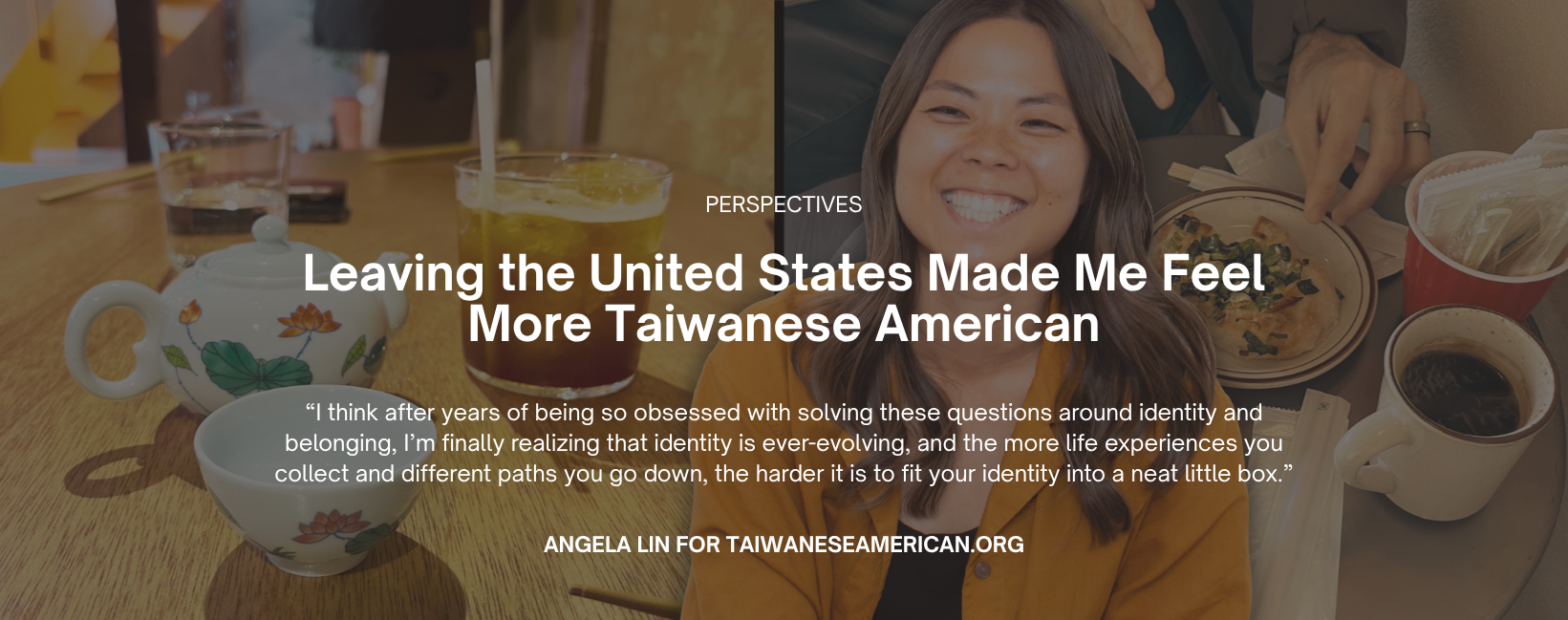
“But where are you really from?”
That’s the age-old question so many of us Asian-Americans have received throughout our lives living in the U.S. And while many have various objections to the principle of the question, for me, the real reason that question used to get under my skin was because it was really an identity question: “Which world do you belong to?”
And the answer to that wasn’t nearly as clear as an origin story.
This identity crisis is something I’ve struggled with deeply for most of my adult life. I even went so far as to co-host a podcast literally called But Where Are You Really From?: An Asian-American Struggle exploring countless topics trying to unpack that very question over the course of five years.
And yet, life continues to take its twists and turns, and as fate would have it, the answer to my identity struggle unexpectedly became very clear to me the moment I moved out of the U.S.
I can unironically say that I have never felt more American nor more Taiwanese now that I have immigrated to Asia. It is a categorically different identity experience than the one I had living as a Taiwanese-American in the United States.
A Sense of Ease with Other Asian-Americans in the U.S.
Don’t get me wrong – I love the Asian-American community. Especially having grown up in Southern California where various ethnic enclaves have flourished, I’ve always felt a sense of instant ease being around my fellow Asian-Americans. There’s something so comforting in knowing that the easiest way to find a crowd of Asian-Americans is to roll up to the favored boba shop of the moment (because we’re always on the hunt for the newest and best boba!), and that even major mainstream retailers like Costco have adapted their local inventory to carry the likes of commercial-size fish sauce and Taiwanese dried sausage (香腸 / xiāng cháng).
Southern California feels like its own microcosm that’s not simply Asian culture and goods being imported into the West, but rather an entirely unique, adapted culture of its own. We can all appreciate a beloved brand being imported from the motherland, like Din Tai Fung and TP Tea, but there’s something so special about our homegrown Asian-American brands like Wong Fu Productions’ Phil Wang opening Bopomofo Cafe, and older generational brands evolving thanks to the newer generation – take 99 Ranch launching its own merch, or how booming HMart has become since the founder’s kids took over, to the point where HMart now occupies huge retail footprints that were previously owned by American supermarket chains like Albertsons and Vons.
Because of how vibrant the Asian-American community feels in Southern California, even if we are technically minorities of the broader demographic, there’s a strong feeling of belonging. However, it is exactly because the U.S. is this amalgamation of so many different racial and cultural backgrounds that we can feel such instant affinity with anyone who “looks like us,” even if that is arguably one of the most surface-level ways to assess whether or not you have anything in common with someone else.
What shocked me was finding out how little kinship any Asians living in Asia feel for you simply for being Asian-appearing, as soon as you leave the western context.
Finding Out Just How American I Really Am…in Asia
My husband and I began living the digital nomad life several years ago, after the peak of the pandemic died down and borders had reopened. We spent three years living in Japan, Korea, and Taiwan for extended periods of time. It was especially in the time I spent in Asian countries to which I have no cultural or linguistic connection that I became impossibly aware of just how American I really am.
Having struggled with the “am I American enough?” question my whole life because of my own insecurities around not being white-appearing while claiming the American identity, I quickly realized through even short interactions with locals that what makes me American is that the way I speak, the point of view I have, my mannerisms, the pop culture reference points I have – everything I absorbed from my environment that shaped the kind of person that I am today – is deeply American. It’s undeniable.
Maybe it’s because of how apparent my American-ness is in everyday interactions in Asia that I now no longer take offense to the question “where are you from?,” despite spending years of my life getting indignant whenever anyone asked me that in the U.S. While in the U.S. I assumed an underlying insult or discrediting of my American identity, here in Asia I tend to assume an inherent innocence to the question because they grew up in a mono-ethnic society in which their nationality is usually associated with a singular expected outer appearance. So I have gotten very used to answering that question with “I’m Taiwanese-American. I grew up in the U.S. but my parents are from Taiwan.”
But life has a funny way of continuing to throw curve balls at you. Here I am at the ripe age of 35, finally feeling at ease with my identity of being both American and Taiwanese, and life decides to throw another flavor of identity struggle at me to wedge me out of this place of comfort.
Leaning Into My Taiwanese Identity in Asia
Now that I’ve transitioned out of nomadic life and into actually immigrating to a new country (Japan, by the way), I’m now struggling with finding my community…“my people.”
Remember how I said I felt at home around other Asian-Americans in the U.S.? Those were my people. I instantly felt like I belonged in that group. We had a shared understanding and life experience. But now that I’m living in a mono-ethnic society where being of any immigrant background is very much a demographically statistical minority, that community has vanished, and I’m left wondering, “So who are my people here?”
Ironically, for the first time in my life as someone who always struggled with insecurity around my Mandarin proficiency, I now find myself grasping to find and connect with people who live here who speak Mandarin.
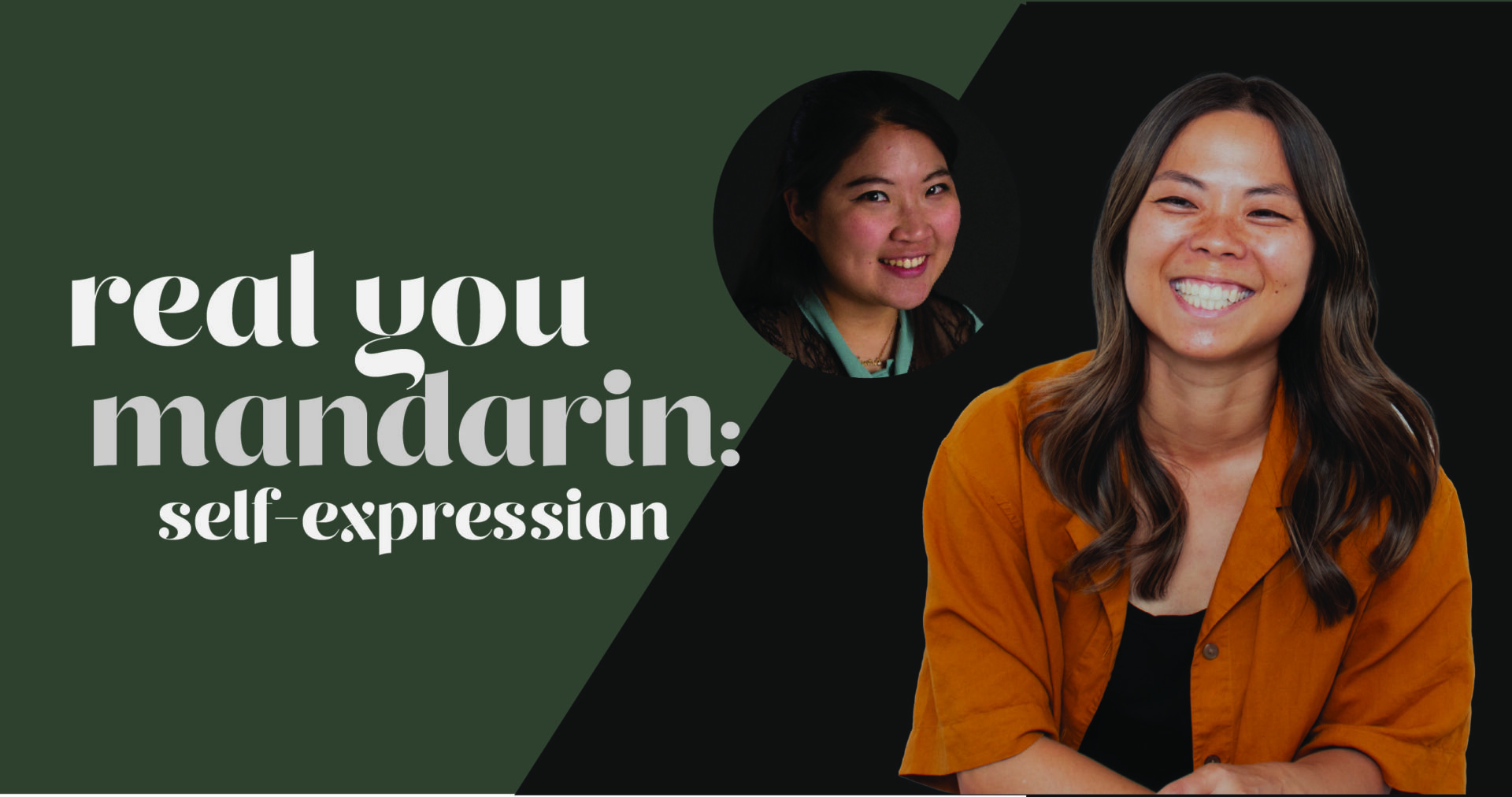
I actually created a platform called Real You Mandarin two years ago to help people like me who grew up speaking Mandarin at home with their families but struggle with holding deeper conversations on real life topics (i.e., relationship dynamics, expressing emotions). I decided to create these resources because of how frustrated I was with my own inability to express myself fully in the language of the other half of my identity, and I knew there must be others out there like me struggling with the same.
Perhaps it’s because of this work that, while I still feel plenty of insecurity around speaking Mandarin, I’m now desperately seeking out others I can connect with through this other key language I can communicate in. After all, I’m now an immigrant in a country in which I’m still very much learning the language, so it’s no surprise that English and Mandarin are ranked way higher than Japanese for me in terms of fluency.
But I recently had two completely polarizing interactions involving Mandarin that got me really pondering this question of “Who are my people?”
The first still makes me feel warm and fuzzy inside when I think about it. A local coffee shop recently did a pop up event where a Taiwanese chef who grew up in Japan was selling Taiwanese congee (稀飯 / xī fàn) with all the works – I’m talking over 20 different potential toppings. I was excited to attend the event with the hope that I would feel some sort of connection with the Taiwanese chef.
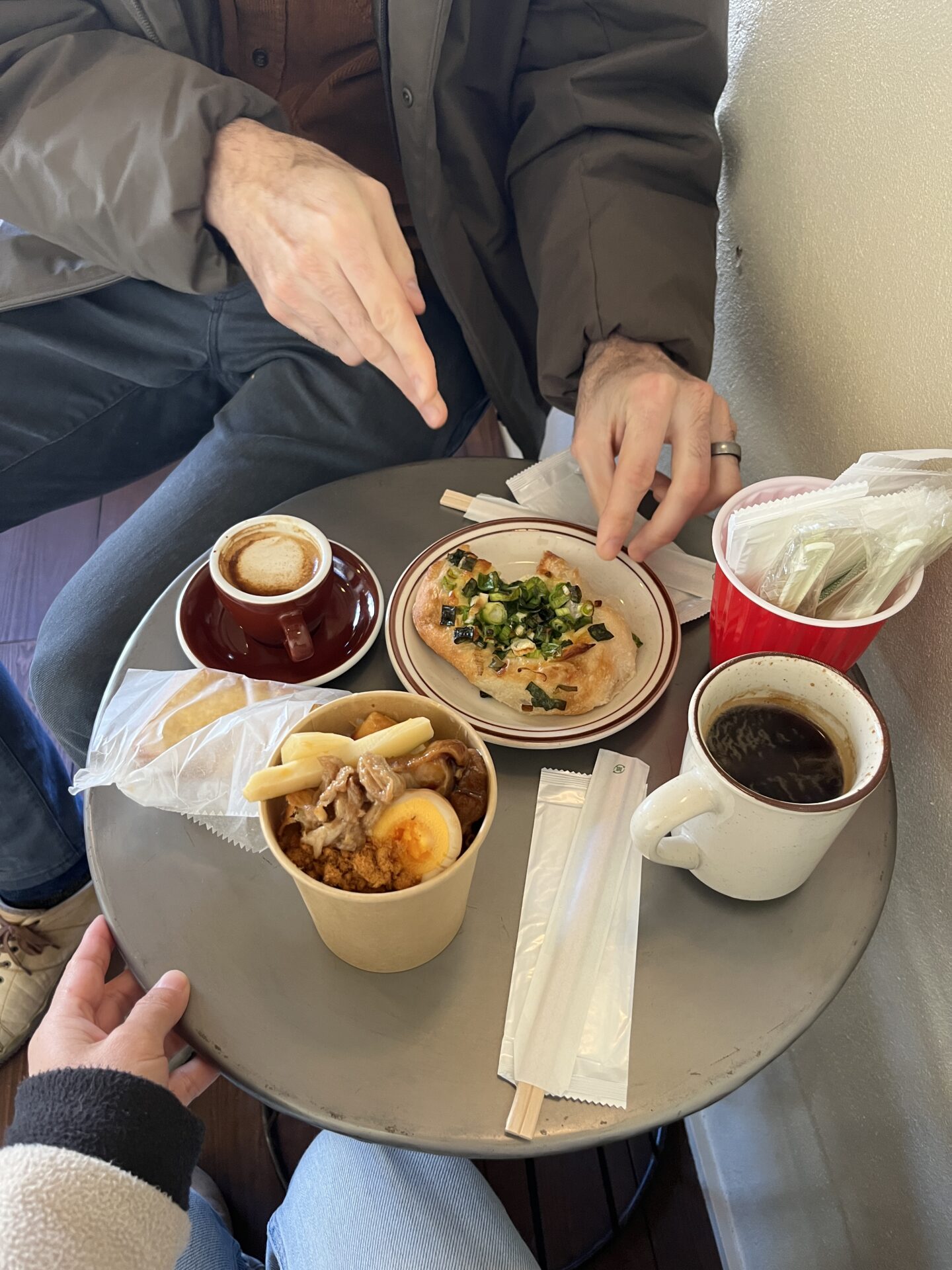
When it was my turn to tell her which toppings I wanted, I started in Japanese saying “actually I’m also Taiwanese,” and then hesitatingly switched to Mandarin, to which I was instantly greeted with the biggest smile and that almost familial warmth that many Taiwanese people are known for displaying even to strangers. She started talking to me like we were close friends, empathizing that it must have been a long time since I’ve tasted these flavors, and started offering me double the toppings for free because I “had” to try them. 別客氣 / bié kè qì / don’t be polite with me, she kept insisting, as I kept insisting back that it was too much and she was being too kind!
In that moment, even though I had always previously felt insecure in the “Taiwanese” half of my Taiwanese-American identity, for the first time, being second-generation didn’t matter, and we recognized each other as part of the same in-group. I instantly felt a sense of home and a piece of my heart filled back up after realizing that I could be homesick not just for the country I grew up in (the U.S.), but also for a familiar cultural identity and belonging.
From that moment on, I must have created an unconscious script in my head that any time I meet a Taiwanese person, I would feel instantly connected with them like I had with the congee chef, and that I’d start to build more and more of my community out here. But as fate would have it, the polar opposite experience happened a few weeks later.
I had been on a kick of researching good Taiwanese restaurants in the area, as I’ve always been one to search for connection to culture through food, and I was excited to go check out one of the spots I had saved. The interior of the restaurant was beautifully designed, the menu was written in that familiar handwriting style similar to so many of my Taiwanese relatives, and the pork rib soup (排骨湯 / pái gǔ tāng) tasted authentic. The staff were all warm, but I was dancing that fine line of trying to suss out whether or not they were actually Taiwanese and could speak Mandarin, so I began by speaking to them in Japanese.
I finally mustered up the courage to ask one of the staff members in Japanese if all the staff were Taiwanese, to which she replied that yes, they were. I instantly beamed, replying, “Me too! Well, I’m Taiwanese-American” in Mandarin. To which she continued replying in Japanese with the polite but relationally distant manner that is customary in Japanese culture between strangers.
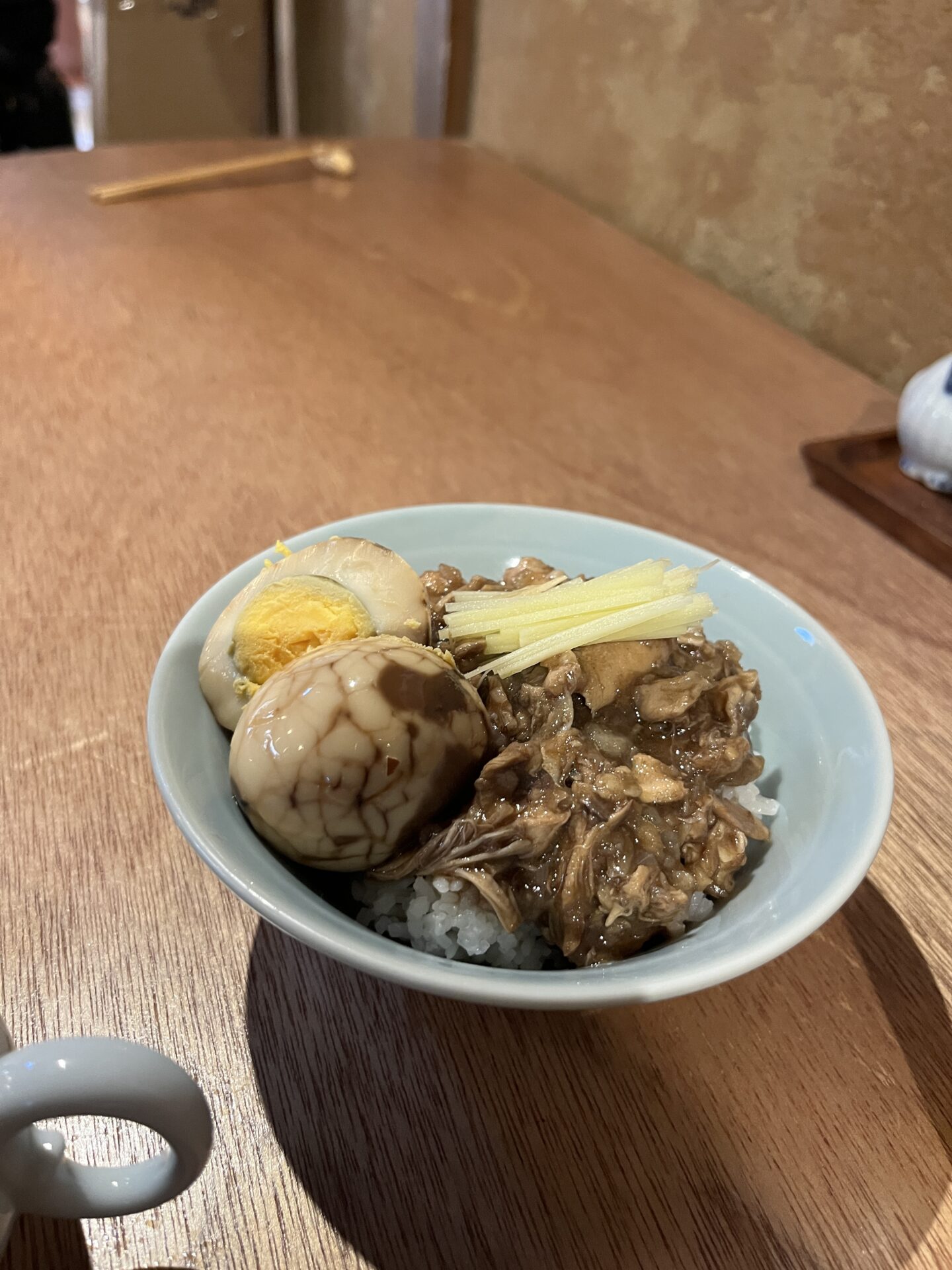
I couldn’t help but feel a wave of disappointment that this hadn’t instantly opened us up to each other. I realized that the intimacy I’d expected to forge had two touchpoints: a common language, Mandarin, and a shared experience of being “foreigners” in Japan. However, I quickly realized that both those assumptions were wrong. Now that I’m encountering second- and third-generation Taiwanese in Japan, I’m understanding that Mandarin as a shared language is not a given. After all, it’s not a given that every Taiwanese-American can speak Mandarin, so why should I assume that all second-generation Taiwanese in Japan can speak it? And regarding feeling like a “foreigner” in Japan, perhaps I was simply projecting my own feelings onto her experience. She was likely born and raised in Japan, so she may not feel like a foreigner at all, especially because as someone Asian-appearing and fluent in the native language, she can “pass” fairly easily. I saw her as someone with whom I had much in common; she probably saw me as someone from a completely different cultural context than her own.
Still, I am learning to find my people. I actually feel most comfortable code-switching between Japanese and Mandarin with other Taiwanese living in Japan. If you had told me a year ago that Mandarin would be my point of connection with others, I would have laughed. I was so insecure in my Mandarin abilities, and always felt like I wasn’t really Taiwanese, so I always put up this invisible barrier between myself and “real” Taiwanese people.
Now that I and other Taiwanese in Japan are facing similar struggles to assimilate in this new society and our shared language is Mandarin, I suddenly feel a lot more confident in my Mandarin and also my identity of being Taiwanese. Has my Mandarin actually improved that much compared to a year ago? Probably not, but my confidence in my use of the language to connect with people has finally allowed me to lean heavily and proudly into the other half of my identity.
I think after years of being so obsessed with solving these questions around identity and belonging, I’m finally realizing that identity is ever-evolving, and the more life experiences you collect and different paths you go down, the harder it is to fit your identity into a neat little box. And the community that you feel closest to at any given stage of your life depends on the challenges and priorities during that time.
At least for me in this current season of life, I feel very solid in my American identity and no longer question whether I am “American enough.”
On the other hand, I’m excited to learn more about myself and how I’ll rise to the challenge of assimilating into a new society and culture, while simultaneously deepening my relationship with my Taiwanese identity through more frequent use of the language and building connections with other Taiwanese people.
If you’re interested in following along on this new life chapter and also improving your own Mandarin, you can watch/listen to Real You Mandarin: The Podcast, where I talk with native Mandarin speaking guests about real life topics and help all of us learn grown-up vocabulary through the context of these real conversations. I’ve asked some of my new Taiwanese friends here in Japan to join as upcoming guests, so you can look out for those episodes too.
And if you want to go deeper with building your confidence around expressing yourself in Mandarin, I’m incredibly proud of the recent completion of our latest course, Real You Mandarin: Self-Expression. It’s a self-paced online course of video-based lessons centered around navigating some of life’s toughest challenges: expressing your emotions, interpersonal relationships & dynamics, fertility & parenting, caring for aging parents, and self-growth. If you’re interested in joining the course, we’re offering TaiwaneseAmerican.org readers $25 off with code taiwaneseam25 (all lowercase) at checkout through the end of AAPI Heritage Month (May 31, 2026). You can try a free lesson on expressing happiness & positive emotions to check out the format and learn some of the actual vocab taught in the course before committing. We hope you’ll join us in unlocking the real you in Mandarin!
Follow Angela’s journey with Real You Mandarin on Instagram and TikTok at @realyoumandarin.



Leave a Reply