
Guest Contributor: John Lee 李榮恩
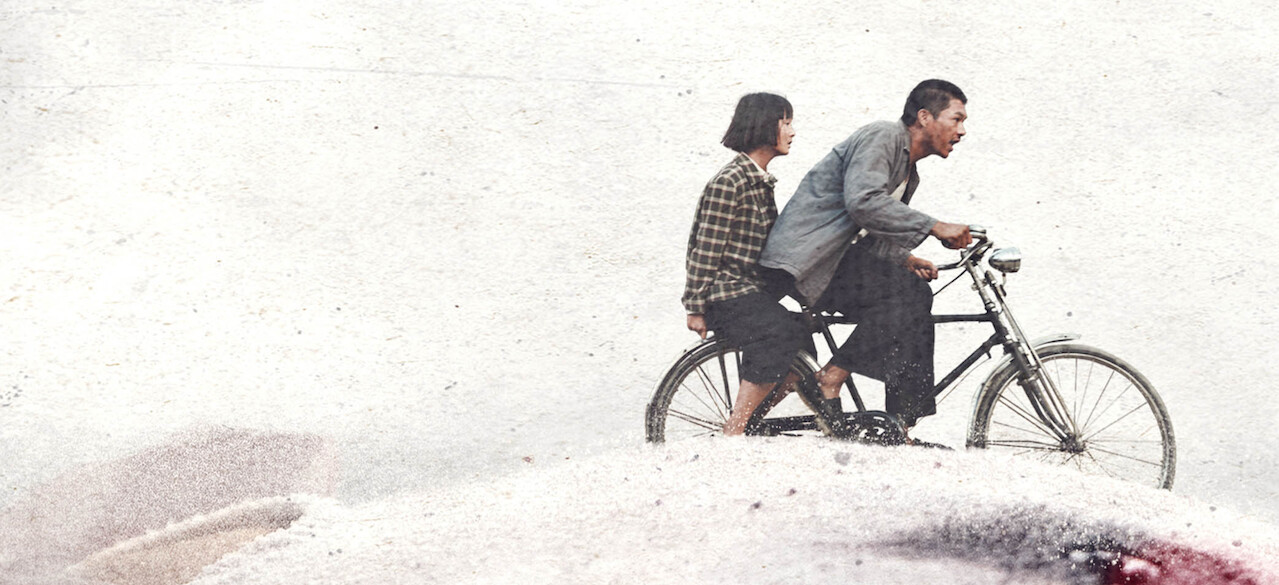
A Foggy Tale, 《大濛》is set during Taiwan’s White Terror era, the long stretch of martial law from 1947 to 1987 during which thousands of Taiwanese were imprisoned, disappeared, or executed under the Kuomintang government for suspected communist sympathies or political dissent. It is the period in which my grandparents grew up. And yet, growing up myself, I never heard them speak of it. The fog of that era was not only cinematic. It was real, and it had engulfed my own family’s history like something permanent, something we had all agreed, without saying so, not to disturb.
So watching A Foggy Tale was a strange and tender kind of grief: the grief of encountering something true about people you love, through art, because the people themselves could not tell you.
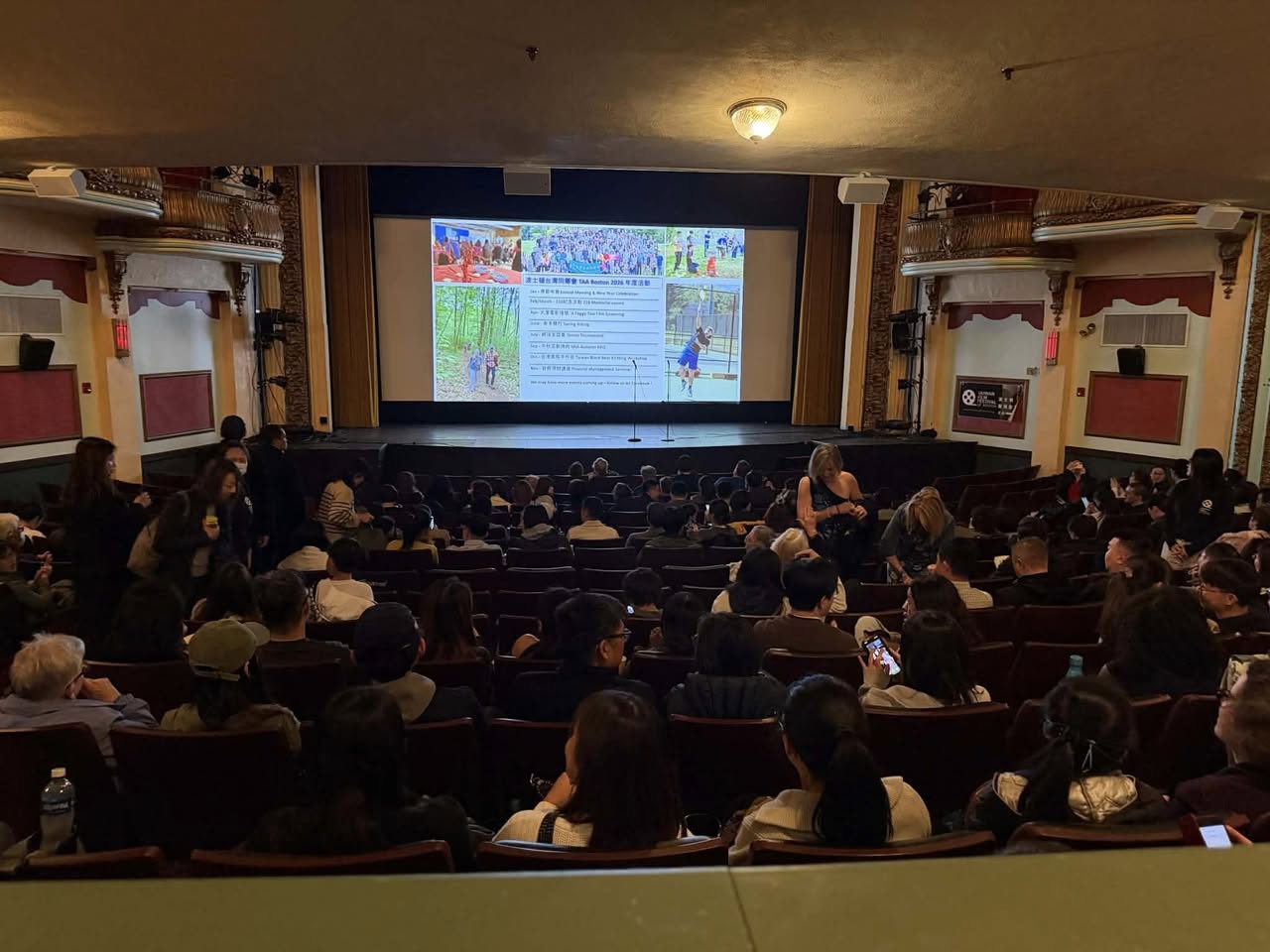
I watched it on April 17, 2026, at a special TAA Boston screening — the film had not made it into American theaters, and so when I heard it was coming, I invited every Taiwanese person I knew in Boston. What made me so eager was a conversation with my parents, who had seen it in Taiwan with my great-aunt and paternal grandparents. They told me everyone had been brought to tears. I wanted that. I wanted to be in a room full of people who understood, even if none of us would say so out loud. The TAA Boston screening gave us exactly that — and it is the kind of event I hope keeps happening.
What the film does so beautifully, and so unusually, is refuse to be only tragic. There is darkness in it, but there is also an extraordinary lightness: a humor that does not feel like evasion, a warmth that does not feel like dishonesty. Director Chen Yu-Hsun understands something difficult to hold in mind when confronting historical atrocity: that people who lived through terrible things did not experience their lives as only terrible. They fell in love. They made each other laugh. They had normal, happy moments. The horror was real. But so was everything else. This balance is genuine — the light that insists on existing inside the dark, the capacity to carry weight without becoming only the weight you carry.
The film’s linguistic texture is worth pausing on, because it mirrors something true about Taiwan’s history that is rarely captured so fully on screen, and because it is already encoded in the film’s title. The original title is 《大濛》. Mandarin readers see the characters and parse them as “big fog” or “heavy fog.” But Taigi speakers hear something different: not a noun but a verb, an engulfing action — a fog closing in, covering, overtaking. The title does not name a weather condition. It names the process of being swallowed. That distinction, invisible to those without the language, mirrors exactly what the White Terror was: creeping, enclosing, unspoken.
This bilingual ambiguity is not incidental. A Foggy Tale is a Taigi film at its heart, and its characters move between Taigi, Mandarin, and the various dialects spoken by Chinese immigrants throughout. Taigi is the language of the people themselves, one that was suppressed, that parents were sometimes punished for passing to their children. Language, in Taiwan, has never been simply a means of communication. It has been a marker of loyalty, a medium of control, a vessel of identity that governments tried to break and families kept whole in secret.
I do wish the English subtitles had found some way to signal which language was being spoken at each moment. For me, hearing the shift from Mandarin to Taigi was itself storytelling — including the Mandarin-speaking policeman who, when the captain isn’t around, softens into Taigi with the main character, moving between the language of authority and the language of home. That distinction is load-bearing: it is part of how the film tells you who has power and who does not, who belongs and who is being watched. For anyone without Mandarin or Taigi, I suspect that whole layer passed by in silence, invisible beneath a single undifferentiated English line.
There is a song I have been thinking about since that night, written by Hsiao Tyzen originally in Taigi for the Taiwanese diaspora, called “The Sojourner.” Before I say more about it, I should tell you something about my own relationship to it. When I was in middle school, my father and I made a home video of the two of us performing it together — me singing in Taigi, him accompanying on erhu. I have not watched that video in years, but I know it exists somewhere, the way certain objects exist in a house: not looked at, but felt. Singing it then, I did not fully
understand what the song was. It was a family song, a melody that moved me in ways I could not yet name.
Its chorus goes:
咱攏是出外人 對遠遠的臺灣來
We are all sojourners coming far away from Taiwan
雖然我會講美國話 言語會通心未通
Though I do speak English, it does not speak my heart
To understand what is in that song, you have to know something about who wrote it. Hsiao Tyzen was a composer who fled Taiwan during the White Terror and was subsequently blacklisted from returning to the island for decades. He wrote music for the Taiwanese independence movement from abroad, from exactly the position of chhut-goa-lang that the song describes. He was not writing about diaspora as an abstraction. He was living it, involuntarily, with no guaranteed end. When he sings we are all sojourners coming far away from Taiwan, he is not using the first-person plural loosely. He had been made one. Home had been made forbidden to him by the very government that had also terrorized the people he left behind.
That knowledge changes the song entirely. What might sound like wistful longing becomes something harder and more specific: the lament of a man who did not choose to leave and could not choose to return, singing to others who left by choice and still could not quite come back to themselves. And it changes, retroactively, what I was singing as a child — without knowing it. I was a middle schooler with an erhu-playing father and a borrowed melody, singing words in Taigi whose full weight I had not yet earned. The song was patient with me. It waited.
I find the second line — the tongue understands but the heart does not — almost unbearable in its precision. There is the language you can speak, and there is the language that speaks you. They are not always the same. This is what the film, too, was trying to show — and what the untranslated silences between its languages made audible, for those who could hear them.
I grew up in America, in English and Taigi and Mandarin, in a family that kept its silences. I knew, in the way you know facts, that my grandparents had lived through the White Terror era. I had the words for it. But knowing a thing and hearing it are not the same.
A Foggy Tale moved what I knew from my head into something that felt like the body. My grandparents grew up in the Taiwan the film depicts: in that fog, on that beautiful and terrorized island. And somewhere between their childhood and my American one there is a gap that only art, apparently, could make visible to me.
My grandparents have never seen A Foggy Tale. I do not know if they would want to. To watch a film about the era you survived is a different thing than watching a film about history — it is closer to being handed a mirror and asked to look at what you have carried without knowing you were carrying it.
But I am glad I watched it. I am glad it exists. There is something that art can do that memory cannot: it can give shape to what was too large or too dangerous or too painful to be spoken aloud. It can say, to the people who lived through something and to the descendants who only half-understand it: this happened, and it was real, and it mattered, and you are not alone in it.
Watching A Foggy Tale, I felt, for the first time, that the fog my grandparents carried had lifted a little. Not because I understood them better — understanding is too clean a word for what happened. But because I sat in the dark, in a room full of Taiwanese people in Boston, in a story that was theirs before it was mine, and I heard something true.
唱出故鄉的滋味 Let’s sing aloud the longing of homeland
We are all sojourners. Some of us just take longer to realize it.
Starting May 27, 2026, “A Foggy Tale” is available to stream globally on Netflix.



Leave a Reply