
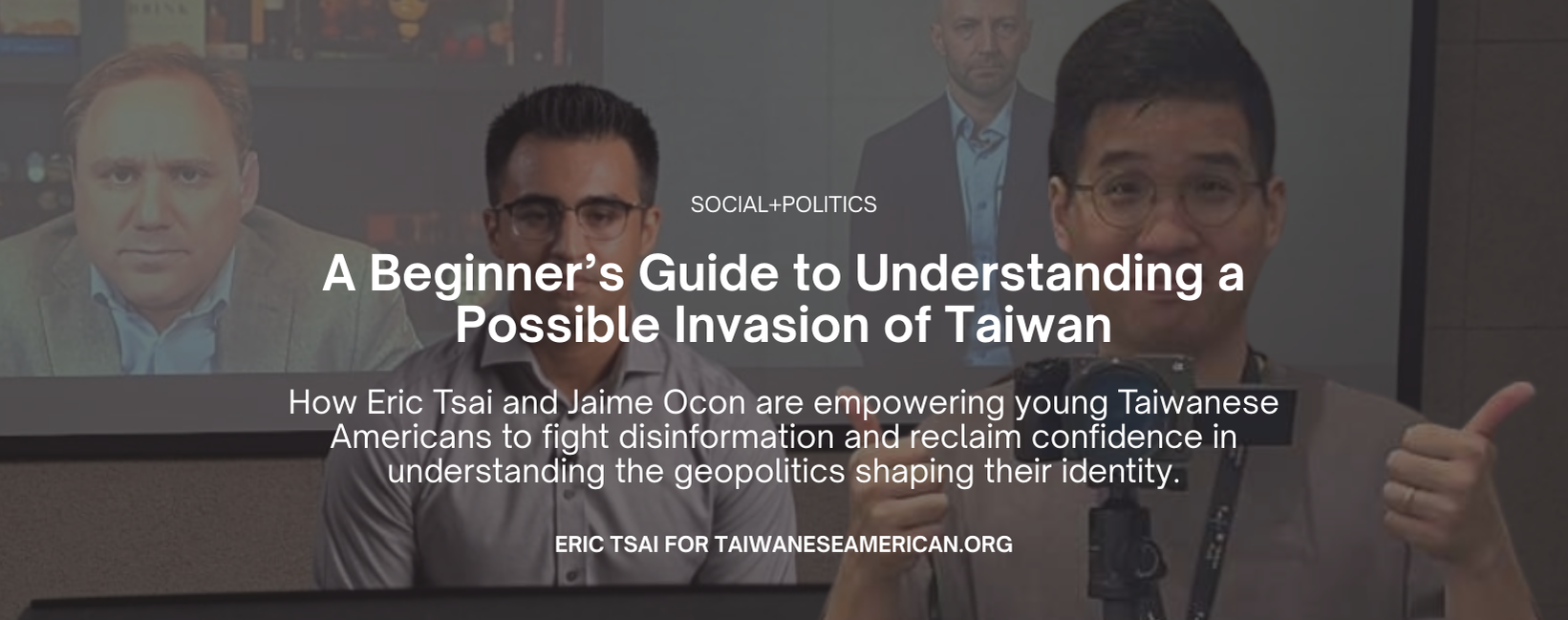
Overwhelmed by the frequent media headlines proclaiming the near certainty that China will invade Taiwan, Taiwanese American Johnny laments, “Taiwan is so cooked.”
Johnny’s reaction isn’t surprising. When my colleague at TaiwanPlus and I were discussing what to talk about in an interview with Leona, he wondered whether Taiwanese Americans like Johnny “feel like they need to be geopolitical experts” simply because they are Taiwanese American, and the mainstream framing of that identity is often in terms of military invasion and geopolitical tension.
Well, this is what I’m here to demystify. The simple answer is no. Taiwanese Americans should not have to feel like mandatory experts who can make bold analyses about whether China will invade Taiwan. But I am also sympathetic that the topic is also relevant, and can induce a lot of anxiety and fear, especially when it does impact two countries that Taiwanese Americans care deeply about. So for those who do want to articulate a coherent response to the question, here are some things I learned as a TaiwanPlus producer working specifically to understand a potential Chinese invasion of Taiwan. I hope these resources help address some of the confusion, and empower more confident Taiwanese Americans if they choose to engage in the discourse.
1. There won’t be sudden missile strikes
Before Russia invaded Ukraine, people knew war was imminent. Maybe not the exact time, but people knew it was going to happen. Troops amassing at the border was the first thing that had to happen for an invasion.
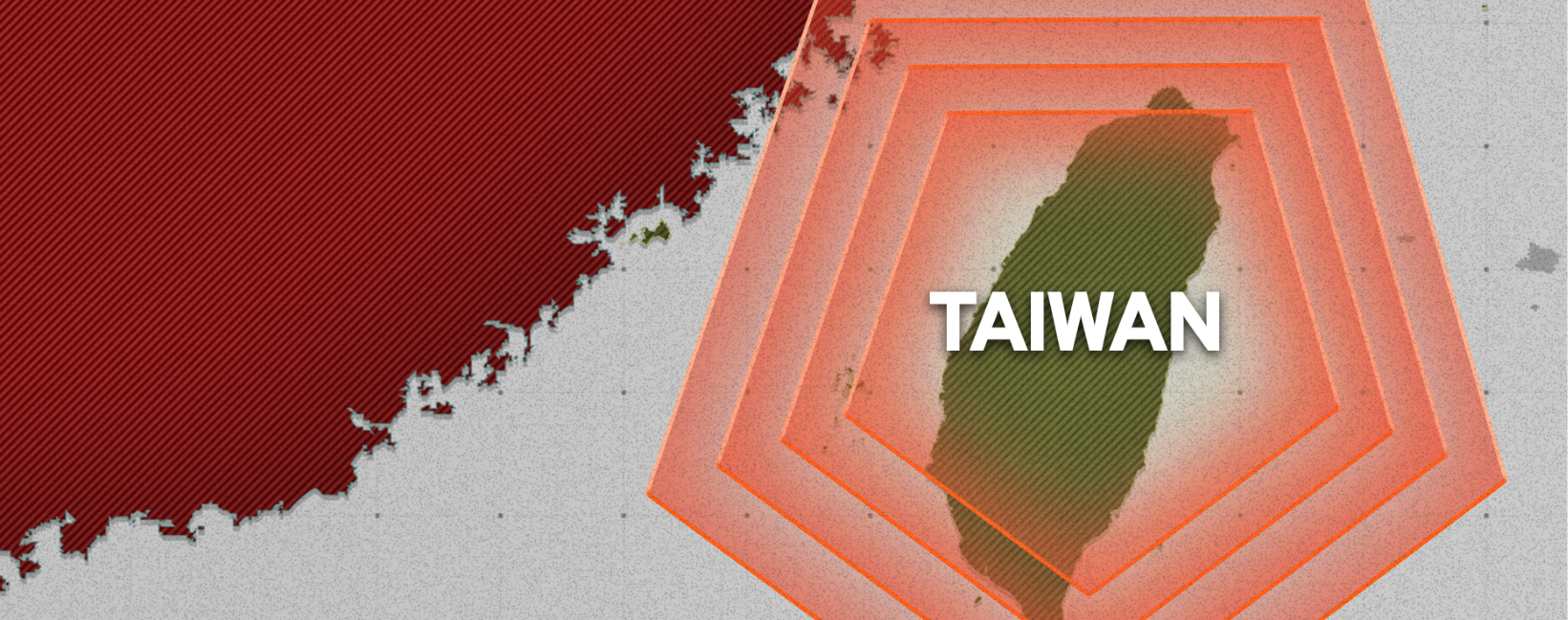
The far more likely situation for Taiwan is a blockade. China wouldn’t announce they’re administering a blockade. Instead, China would conduct some kind of naval drill that turns into a blockade. But Taiwan knows this is the likely scenario and has been taking stock of what the country has to survive the blockade. To be clear, a blockade is an act of war. This line was explicitly said by one of the experts. Because China sees Taiwan as its own territory, they would play this off as naval ships simply sailing and protecting its own borders, but that’s not what the world would see. Especially since it would impact the global economy. The Taiwan Strait is a major part of international shipping. A blockade would mean re-routing all these shipping lanes, impacting the price of goods all over the world.
Taiwan could also try to break the blockade, and if China fires upon Taiwan’s ships, there would be headlines around the world documenting who started the shooting…and the really bad stuff would start. At the same time, this would put pressure on Taiwan’s partners and allies, including the US and Japan, to decide if they are going to act.
Deep dive into blockade:
2. Jets are sexy, but Taiwan needs cost-effective solutions
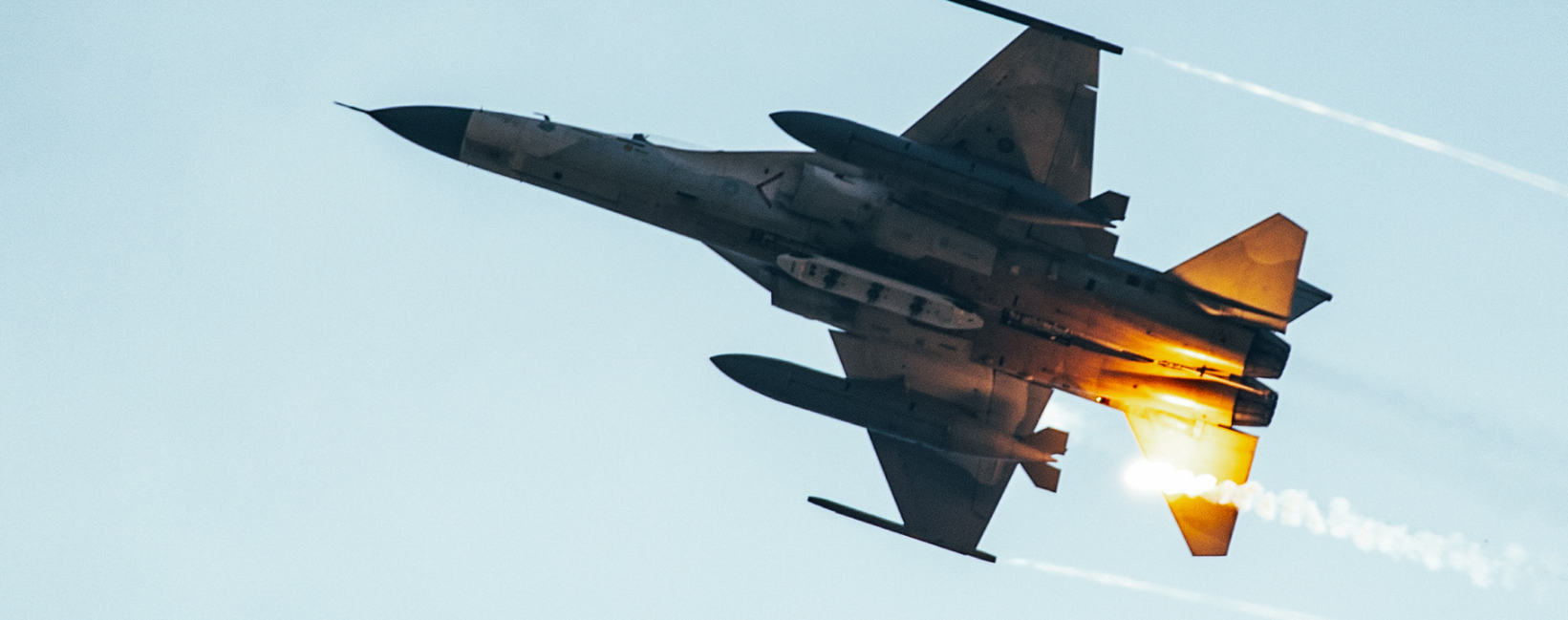
“It’s part of the warrior ethos,” an expert says when asks why jets are still the favored item of purchase. We’ve all seen Top Gun and Top Gun Maverick and jets are cool. But the reality is that Taiwan’s jets cannot go head-to-head with China. Instead, their focus should be on air denial. Taiwan should be looking at drones and anti-aircraft missiles to deny China’s control over the skies. Even in World War 2, air power supported everything else. The reason to take out enemy aircraft is to make sure you can support your own troops either in the sea or on the ground. Basically, Taiwan just needs to make sure that China can’t establish control of the skies because even the slightest threat can really change how China decides to move on Taiwan.
Deep dive into Taiwan’s air power:
3. It’s actually really hard to invade Taiwan
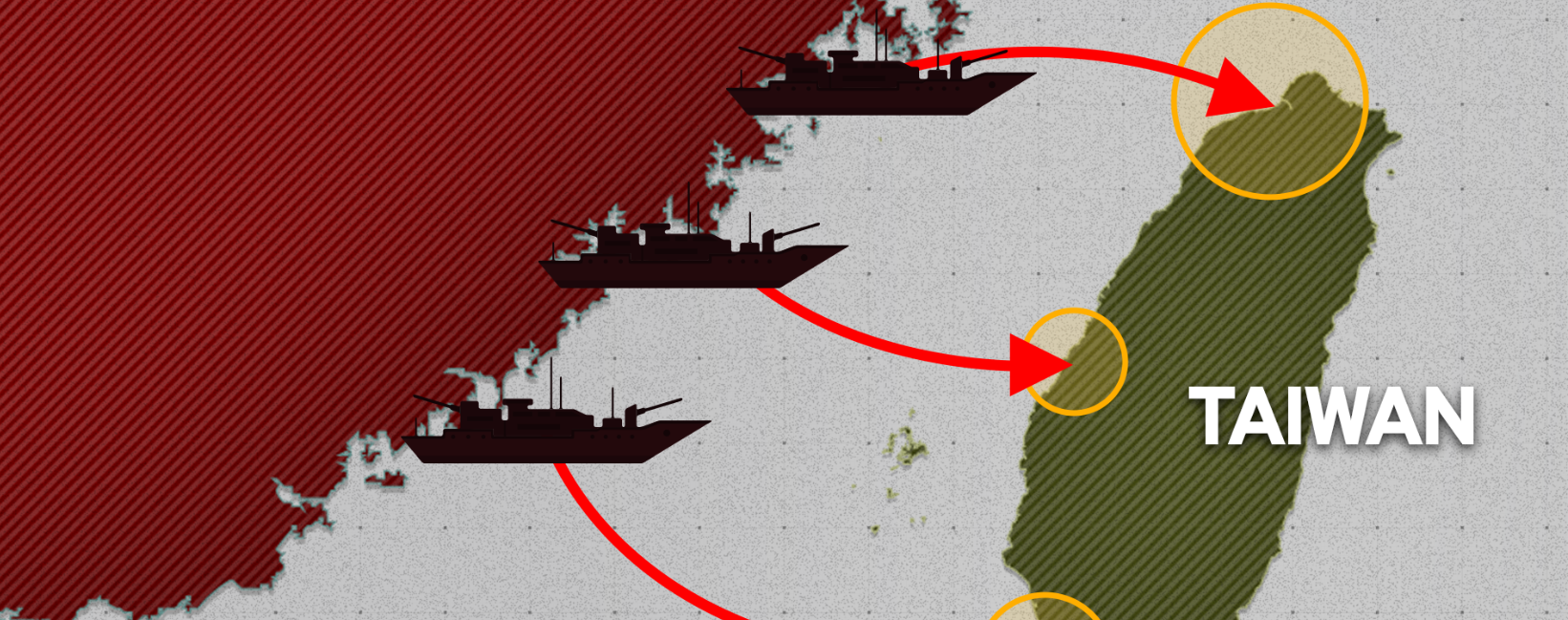
They say real estate is all about location, location, location; well, so is war. During World War 2, Taiwan was dubbed the unsinkable battleship, this was an assessment from United States because they were one of the first modern militaries to draw a plan on how to invade Taiwan. There are very few places along Taiwan’s coastline that can support a Normandy-esque invasion; these are called “Red Beaches”. At the same time, there are only a few time-slots in the year that are good for invasion because of the harsh sea conditions in the Taiwan Strait and the fickle weather (if you’ve been in Taiwan, you know.)
“China would just bomb the hell out of Taiwan” is what a lot of YouTube comments say. This goes back to the blockade. If China’s goal is to level Taiwan, there are many ways to do it, and it would look horrible for China. But if you think about it from a strategic point of view, no country ever wants to go to war if they don’t have to. China’s goal is still to take over the land and command unilateral control over the island. For that, the only way to do it is to put boots on the ground via an invasion, but that could risk everything for Beijing. This is something that I’m coming to learn is very hard.
Deep dive into where China COULD invade:
My own journey
I’m not particularly interested in warfare and weapons, but I think being in Taiwan, it is pertinent that I at least understand the situation. I started this series with my host to explore this topic. He is now a Master’s student focusing on security in Asia, but from the start of the project, I have said that this has to be accessible to Taiwanese Americans, for whom the issue of Taiwan’s security and safety is deeply personal, with worrying implications for their families and loved ones. This series doesn’t explicitly answer the question “Is China going to invade Taiwan,” but I hope can offer foundational understanding of the current situation. More importantly, through interviewing credible experts, I hope this series offers a more balanced resource than an overzealous grandparent or a peer who’s just taken their first class on Asian geopolitics.
A note from the host, Jaime Ocon
If there is something I could add, it’s this: making content is easy; figuring out who you’re making it for and sticking to that is the hard part. What we did was not revolutionary; we put up lights, a camera, and talked about what we saw from being embedded with Taiwan’s military for almost half a decade. But when we started this, we literally had to close our eyes and imagine who was going to be in front of the screen watching this show. I won’t lie, I struggled, because it meant that we had to construct a narrative for a specific group of people who not only call Taiwan home and speak Mandarin but who will experience a different set of emotions than, let’s say, Mr. Policy Man in D.C. We needed to be inclusive of all audiences but we wanted in particular to make sure the Taiwanese American community felt supported and addressed.
The majority of our discussions about the show were about structure and presentation. This is not a series to demonstrate how much we know, to generate views, or to prove a point. The point of this series is to educate people on the difficulty of certain Taiwan contingencies and to fight disinformation. All of the material and content is straight from the source, straight from the people who deal with this every day, and captured raw on camera. I am not Taiwanese American, but from my experiences and interactions, y’all are a resilient bunch—always eager to contribute, never hesitant to stand up for what you think is right. I hope this series accomplishes something similar, and again, huge thanks to Eric for pioneering this project.
Eric Tsai is the cofounder of OFTaiwan and currently serving as the Digital Lead for TaiwanPlus News. He has run multiple workshops about different aspects of Taiwan from its geopolitics tensions with China to the history of the dying language of Taigi. He is currently based out of Taipei but is always down to meet any visiting Taiwanese Americans (or just people in general) and learn about their stories. He also claims to have a really good and different tour to Chiang Kai-shek memorial hall.
Jaime Ocon is an experienced journalist and served as the lead defense reporter for TaiwanPlus, the premier English-language news channel in Taiwan. He has covered pivotal events, including Nancy Pelosi’s visit to Taiwan, China’s military drills around the Taiwan Strait, and former President Tsai Ing-Wen’s meeting with U.S. Speaker McCarthy. Currently, Jaime is a master’s candidate in the Security Studies Program at Georgetown University and plans to specialize in military operations.



Leave a Reply