
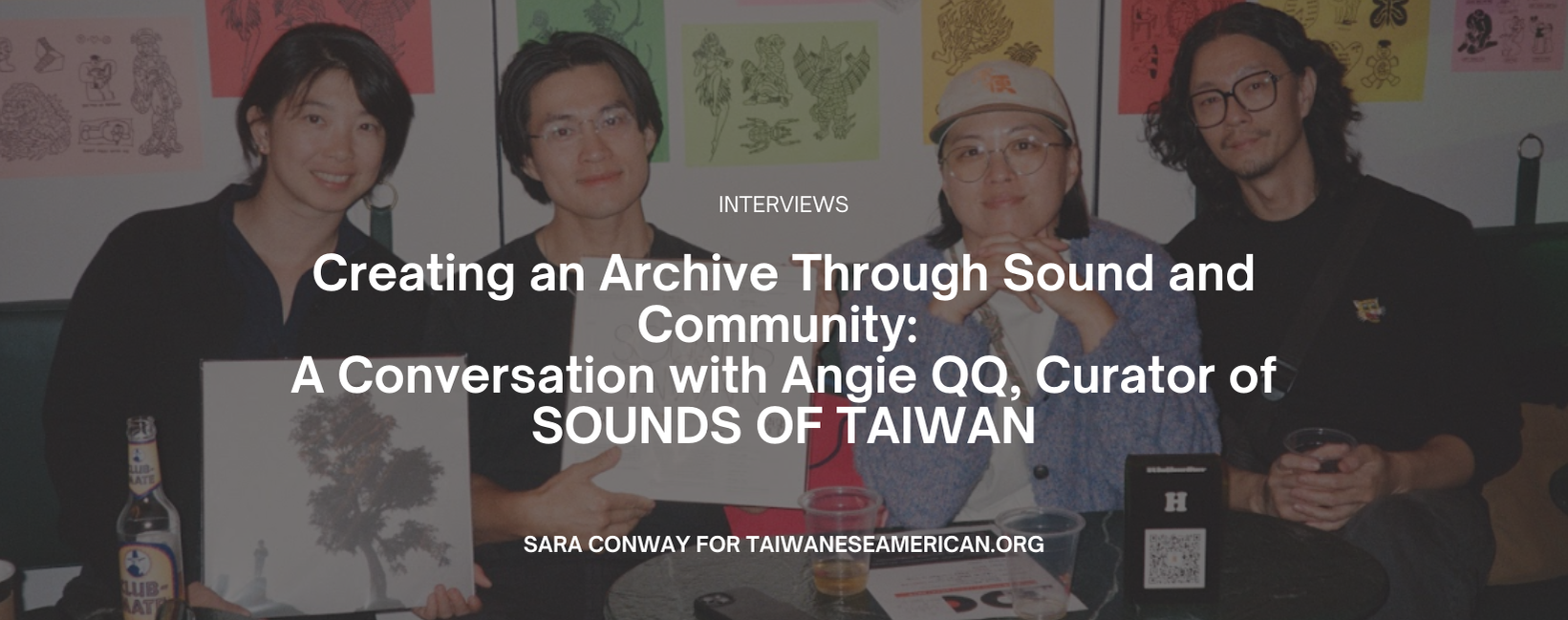
When “Family Time” by Lim Giong starts playing over the speakers at Chao Bar & Record Store in Taipei, it feels a little like coming home.
This is my fourth year living in Taiwan — as a Chinese American adoptee from New York — but the sound of people chattering softly and spoons clinking in drinks takes me right back to when the island started becoming a place I wanted to stay.
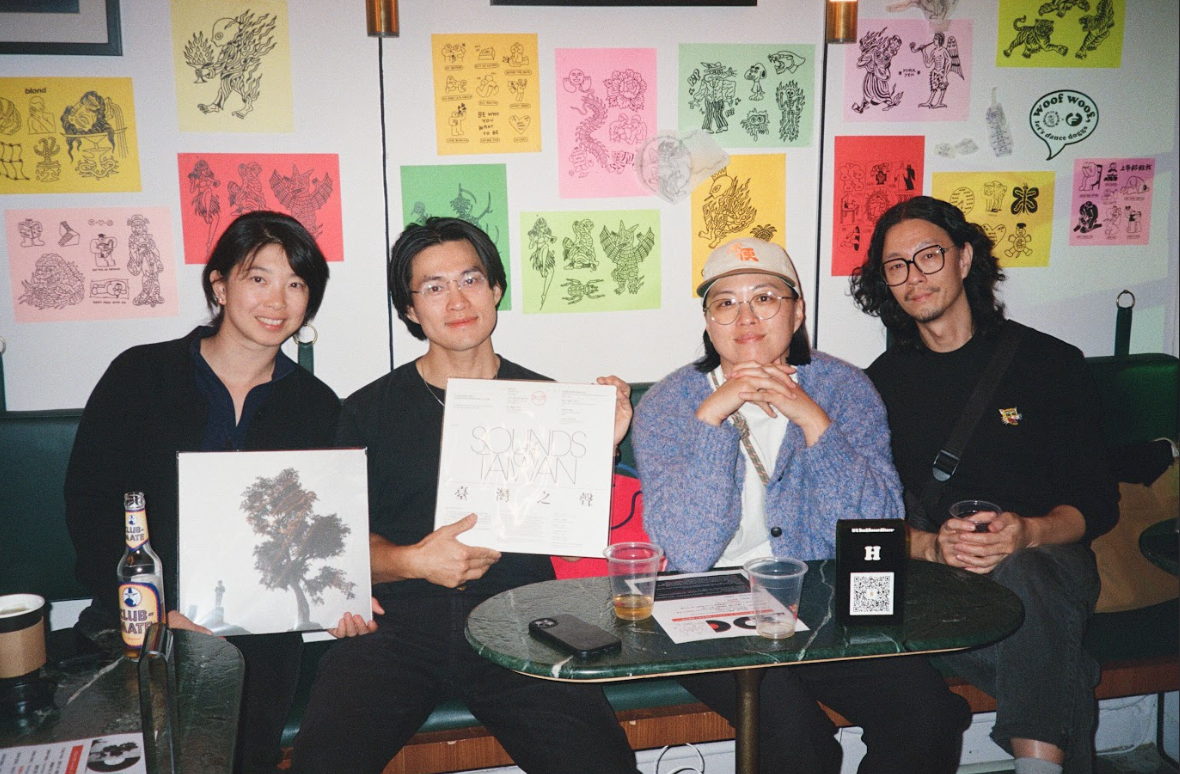
Angie QQ, founder of East Never Loses and A Pure Person Press, created SOUNDS OF TAIWAN with Taiwanese composer Lim Giong and other friends to be an archive of Taiwan’s past and present. The project uses a collection of Lim Giong’s personal field recordings as its foundation. Angie QQ became the curator and A&R of the archive, reaching out to producer friends to contribute to the record and beyond.
It would take five years for SOUNDS OF TAIWAN to be released– and it finally was, last month on November 6. 6. But as Point Hsu, a mentor and “guiding force” in the creation of the record, said to Angie before he passed away, SOUNDS OF TAIWAN came out when it was supposed to come out. “Whenever it comes out, it’ll feel right,” he had said.
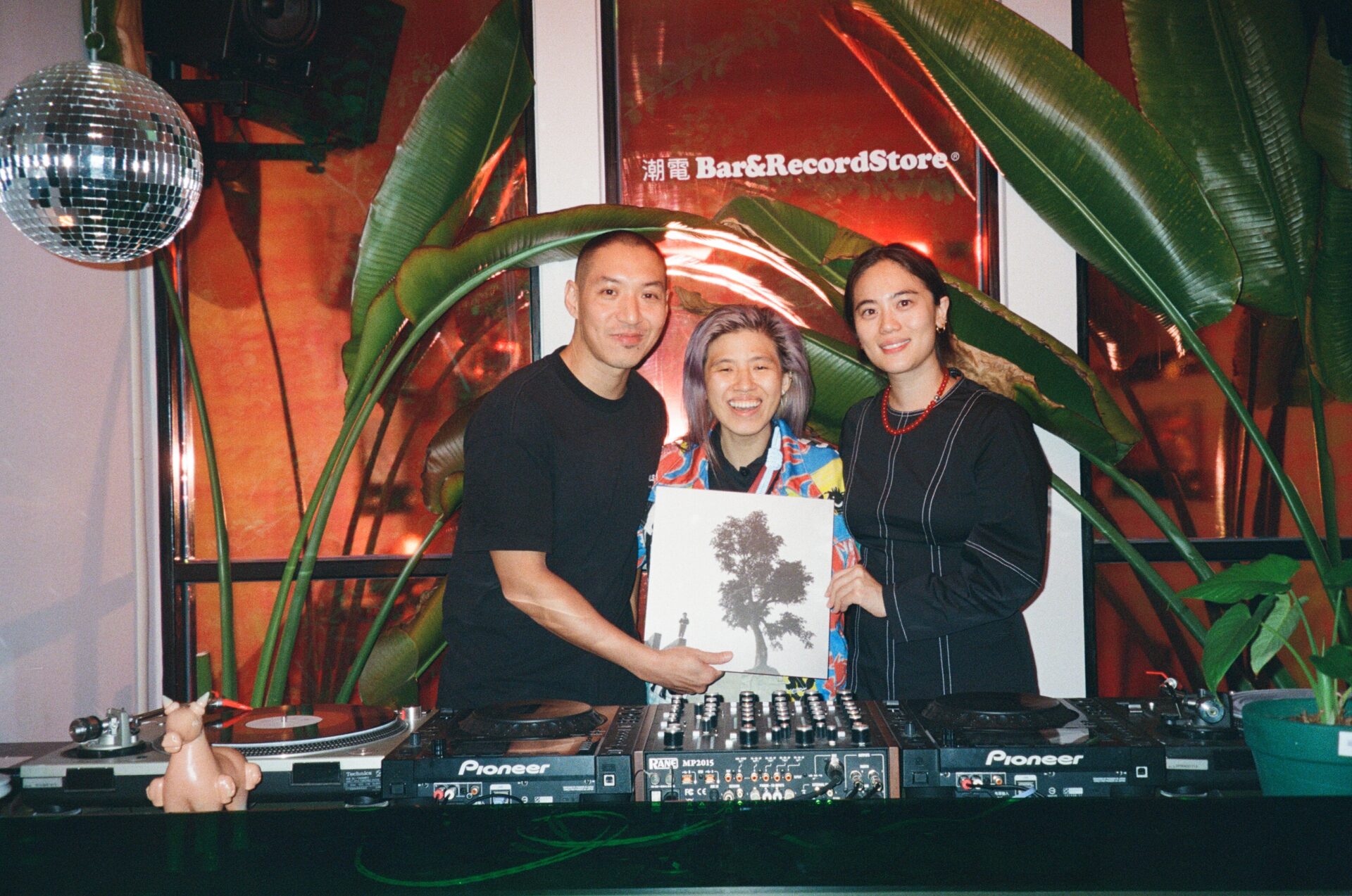
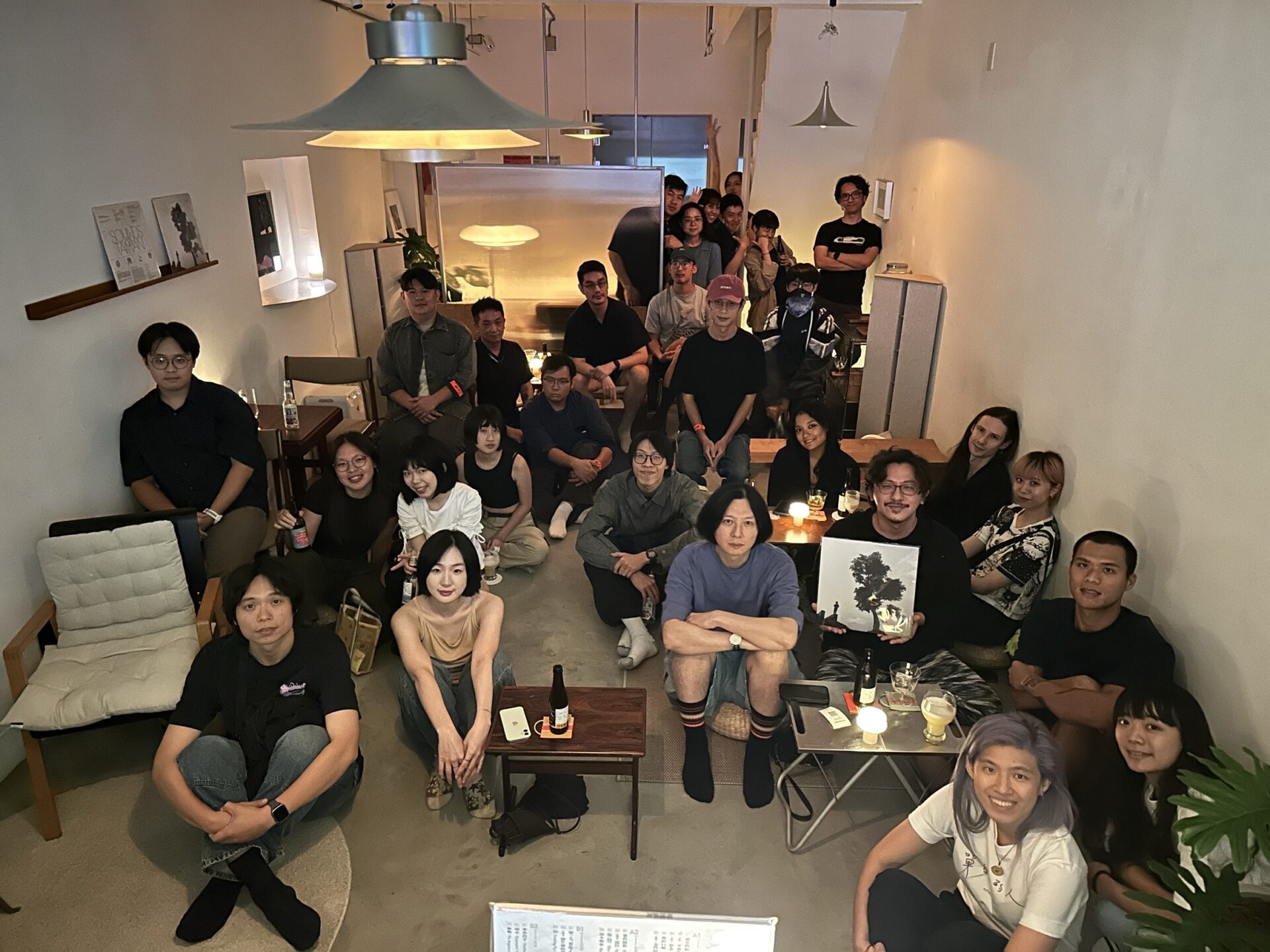
To celebrate this “huge labor of love” and carry on its impact as a connector of communities, Angie QQ organized three listening sessions. One was hosted in Los Angeles (her current home), another in Tainan in southern Taiwan, and the last one in Taipei — a few blocks away from where Angie used to live when she resided in the bustling city.
“These listening sessions are the purpose of the album,” Angie QQ told TaiwaneseAmerican.org. “The point of the music and the point of almost everything that I love to do is bring people together.”
She added, “Ultimately the music is incredible but what the music does when people gather together and can feel that moment together, I think that’s really the goal of SOUNDS OF TAIWAN.”
For Angie QQ, SOUNDS OF TAIWAN may be rooted in Taiwan and the Taiwanese experience, but the project is also all about different worlds discovering the island nation. She hopes to expand it to other sounds of Taiwan like “Birds of Taiwan,” “Temples of Taiwan,” or even “Motorbikes of Taiwan.”
With an excited gleam in her eyes, she emphasized, “I still feel inspired by Taiwan even after all this time.”
In this conversation with Angie QQ, we chat about her first memories of Lim Giong, unexpected challenges she faced while making the record, and how SOUNDS OF TAIWAN is an archive for future generations.
Sara: What were some of your first memories of composer Lim Giong?
Angie QQ: My first memory was definitely through the movie Millennium Mumbo from Hou Hsiao Hsien. [There’s] that iconic opening serene where she is looking back in that tunnel from Keelung and, there’s that song that [Lim Giong] created called “A Pure Person” playing in the background. I remember watching it in North Carolina on the floor of my parent’s house and being kind of in shock and in awe of what Taiwanese culture and music and movies could be.
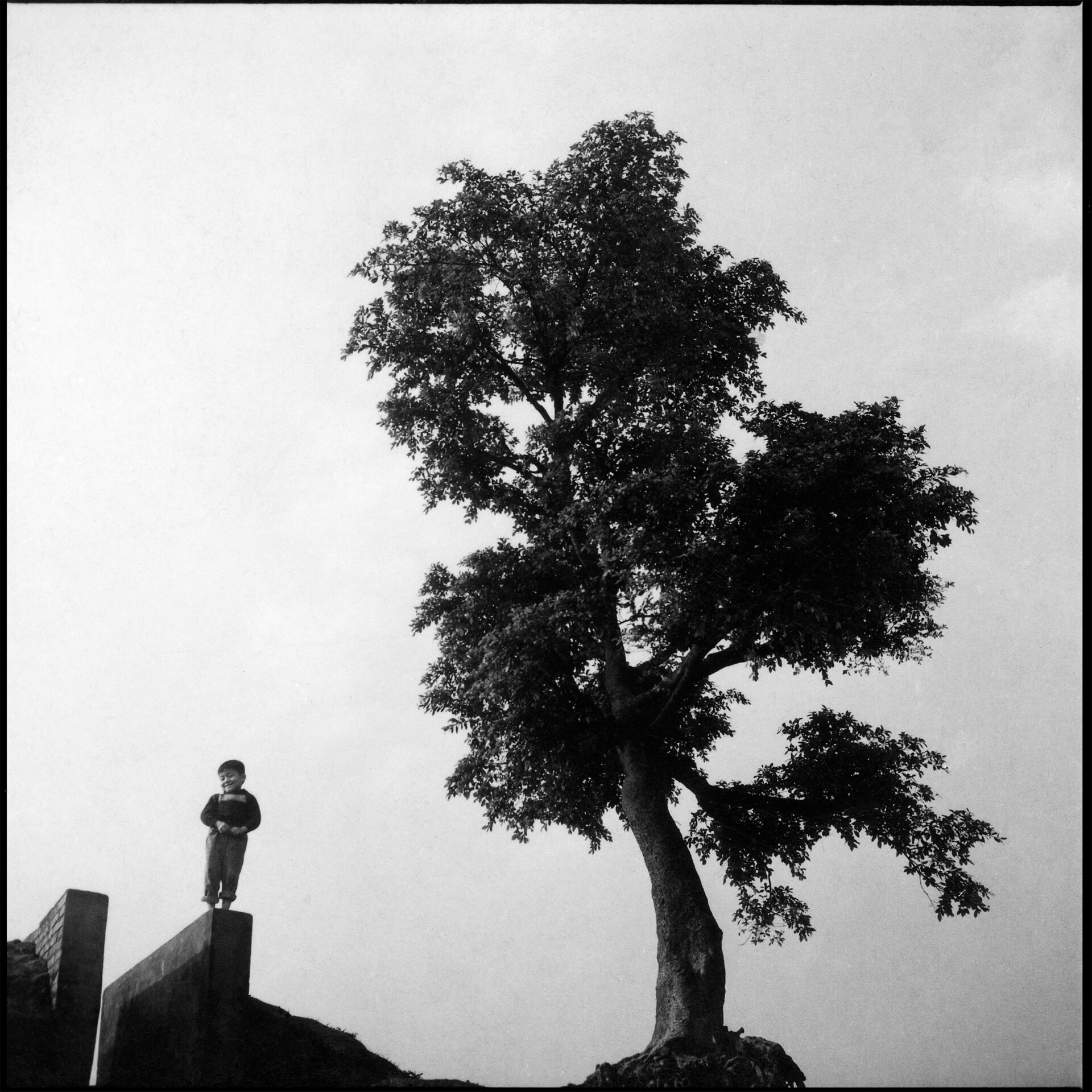
Sara: Besides these recordings, what were the other roots of SOUNDS OF TAIWAN? What sparked the idea of a collaborative project sampling various audio from around Taiwan?
Angie QQ: This sparked naturally because I had a collaboration with Lim Giong before called A Pure Person. We invited different artists to reinterpret that song “A Pure Person” from Millenium Mambo.
Our friendship really formed from my mom translating a lot of my emails to him. That was the foundation of all of our collaborations. When she passed, I moved to Taiwan to find Lim Giong and to work with him and sort of was like “Hey I really want to do something with you; we’ve been chatting through my mom ,and I think it’s time that we actually try to create something special together.” That’s how A Pure Person came to be. So SOUNDS OF TAIWAN is a very natural progression.
In 2020 I was trapped back in LA because I just happened to be [there during] the pandemic even though I was living in Taiwan. The borders closed, and I couldn’t return to Taiwan. I asked Lim like “Hey, I’m in California now; I really miss Taiwan. Do you have any field recordings of Taiwan I can listen to?” He sent a huge folder over to me, and then in my apartment in Pasadena, California I listened to sound after sound. I felt like I was transported back to Taiwan. As a Taiwanese American I feel like I’m always trying to exist in both places at once, and I feel like one way in which to travel is through music.
Once the project started to come together, I realized I wanted to archive the spirit of Taiwan through this record. Not just through the field recordings, but through the feeling of nostalgia; the feeling of the past that we try to capture so tightly in our fists but you know it’s going to fade. It’s this feeling of holding on to something that you know inevitably will change. I hope [this record] stands as an archive to what Taiwan is in the past and present for the future generations.

Sara: What was your experience like collaborating with legends like Lim Giong and Point Hsu helping build out this project with you?
Angie QQ: It wasn’t always easy. I think it’s really difficult to work in a world of in-between when you’re working in Taiwan with Taiwanese musicians, with American musicians between Taiwan and America. My Mandarin is good, but not great […] so it was a difficult project in terms of translating, [with] miscommunication at times… we had to have so many discussions before we were able to really understand what we were looking for.
I also think my personality, which I didn’t realize until I lived in Taiwan, is distinctly American, in the sense that it’s very bold, driven, blunt. Taiwan [has] a little bit of a softer approach.
Some of the difficulties were coming to terms [with], [or coming to] an understanding of this is how I do it in America, but that’s not necessarily how people in Taiwan do it. I need[ed] to understand where those lines are and how to push this forward while respecting both cultures. Ultimately [it was] really rewarding ,but that’s definitely for some of the reasons why it took five years because there was just so much communication that was involved between all parties.
Sara: Can you share some of the unexpected challenges you faced while creating the work?
Angie QQ: Some of the challenges were understanding what does Lim want from this project versus what do I want versus what do the artists who are contributing to the record really want and finding the balance of what we all are trying to express with SOUNDS OF TAIWAN. It’s not just me trying to express what I feel like is the sounds of Taiwan. It’s Lim’s expression of sounds of Taiwan; it’s Emma from No Translation’s expression of sounds of Taiwan. I think one of the challenges was just how do we all have a voice [in] how we want this record to sound, and ultimately it ended up being really beautifully balanced.
Sara: How about some unexpected joys?
Angie QQ: [I had given up] on this record to be honest. There was a point when I was like SOUNDS OF TAIWAN, it’s in the vault. I don’t think it’s ever going to come out. I just got tired. It can be so draining sometimes working on a creative project and you don’t always have the energy. But then meeting Ellen gave me so much hope for this record again.
One of the unexpected joys was talking to Ellen about this record and having her support and working on this record with her. Without her, I truly don’t think I would have had enough joy about this project to continue forward. She made it such a joyful experience.
Sara: There are 800 copies of the vinyl with only 100 distributed in the U.S.. The rest can be found in Taiwanese record shops. Why did you go with this choice?
Angie QQ: I actually moved another 100 to America because that first 100 sold out so quickly that I was like “Ok, maybe we need a little bit more for the rest of the world.” *laughs* This is a record ultimately made in Taiwan. The record is completely manufactured in Taiwan and it’s [a] record for Taiwan.
Taiwanese culture is so incredible and is something that inspires me immensely. I want to be a part of Taiwanese culture, and so I want this record to really be something for Taiwanese people to feel proud of as a part of Taiwanese culture. I know 800 copies doesn’t do anything but [I also want] to support the local music economy in Taiwan. There’s so much amazing music culture happening here in Taiwan, and I want this record to be in that conversation.
Sara: Why is it important to you that the project has limited availability?
Angie QQ: The entire point of this record label [Pure Person Press] is to completely be free of which moves most record labels. I want to [do my part to] preserve the culture of Taiwan, and so it doesn’t need to exist in a way that keeps selling and gets bigger and bigger and bigger. It’s just one and done, like this is the moment in which I want to express these sounds of Taiwan and that’s it. I want it to stay pure in a way, just this singular record release. I [also] wanted to make it a collectible item; you either are a part of it at this moment or you miss out on this moment and that’s okay. It exists digitally so you can always listen to it whenever you want, but physically I wanted it to be this very precious art item.
Sara: I say a sound, you share a memory or emotion:
The sound of the patter of rain
Angie QQ: I think about living in Taiwan in 2019 and feeling so wretched because it had been raining for maybe like 10 days straight. I remember feeling so homesick for Los Angeles and being like I don’t ever want to see another rain[drop] ever again and just feeling so overwhelmed by all the rain.
Looking back I feel like that was such an incredible time because the rain forced me to stay inside all day. I’m someone who’s so active and needs to be constantly stimulated, but during that time I felt sad because I had to be alone with my thoughts. When the sun finally came out, I felt like I processed a lot during that time.
The sound of crickets’ nighttime song
Angie QQ: I think of North Carolina where I grew up. I think of crickets getting lost inside the house and then as a kid you’re like “It’s so loud; I know it’s inside!”
I lived close to a creek in North Carolina, so sometimes the occasional cricket would make its way inside and throw a huge symphony of sounds in your room.
The sound of someone slipping a vinyl into its case
I think of Vinyl Uncle. He was this incredible music mentor for me in Taiwan when I lived here. He also recently passed last year, but I have so many memories of looking at records at his house. He was such a huge informative person in my musical love of Taiwan.
Sara: Using “The sound of…” format, how would you describe your current place, feelings, and/or mindset?
Angie QQ: Just the sound of peace and happiness here in Taiwan right now. I feel like I’m in such a little love bubble. Sorry it’s just you’re the first person who we’ve seen [since getting engaged] so you’re just getting all the extra gooey feelings.
Basically, the sounds of being in love.
Sara: What does SOUNDS OF TAIWAN mean to you as a Taiwanese American artist?
Angie QQ: SOUNDS OF TAIWAN means appreciating who I am as a Taiwanese American through this record. It means appreciating the sounds of Taiwan, of the culture and the religion but also the Taiwanese American musicians on this record and their point of view.
There’s always this feeling in SOUNDS OF TAIWAN that there’s something beautiful that’s about to slip away. I think the point of this record is to hold on tightly to these moments as they exist because they’re not always going to be here. That feeling — it’s a little anxious — of deep appreciation and joy in the present moment.
Sara Conway is a Chinese American writer based in New York and Taiwan. A lover of a good story and a good song, Sara is the creator behind the bookstagram Lyrical Reads and the digital editor at EnVi Media. She also has published her writing in places like Timid Magazine, GRAMMY.com, Clash Music, and JoySauce. Although books are her number one love, you can always find her learning Mandarin, heading to another concert, or petting all the cats she sees.


Leave a Reply