
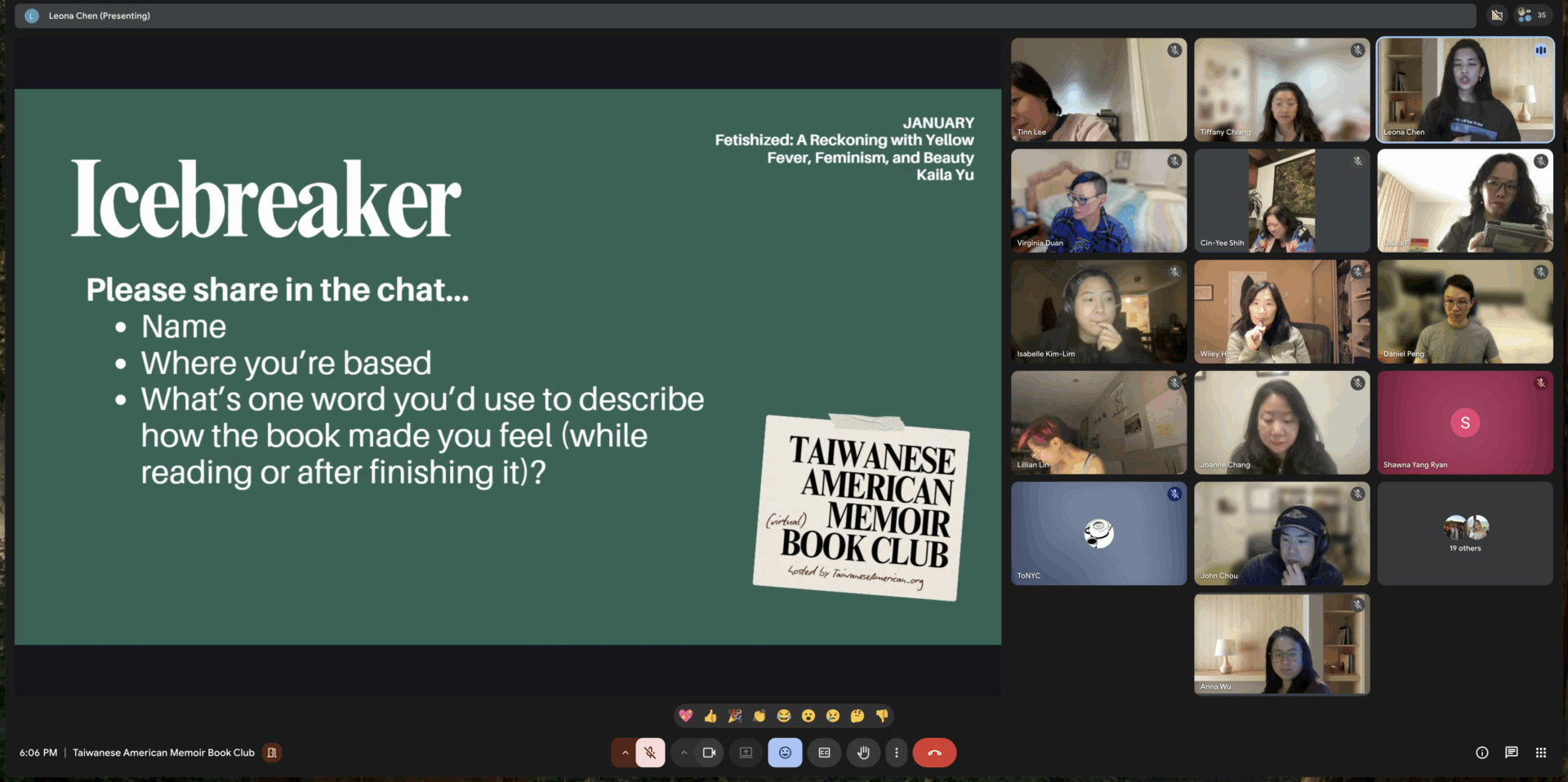
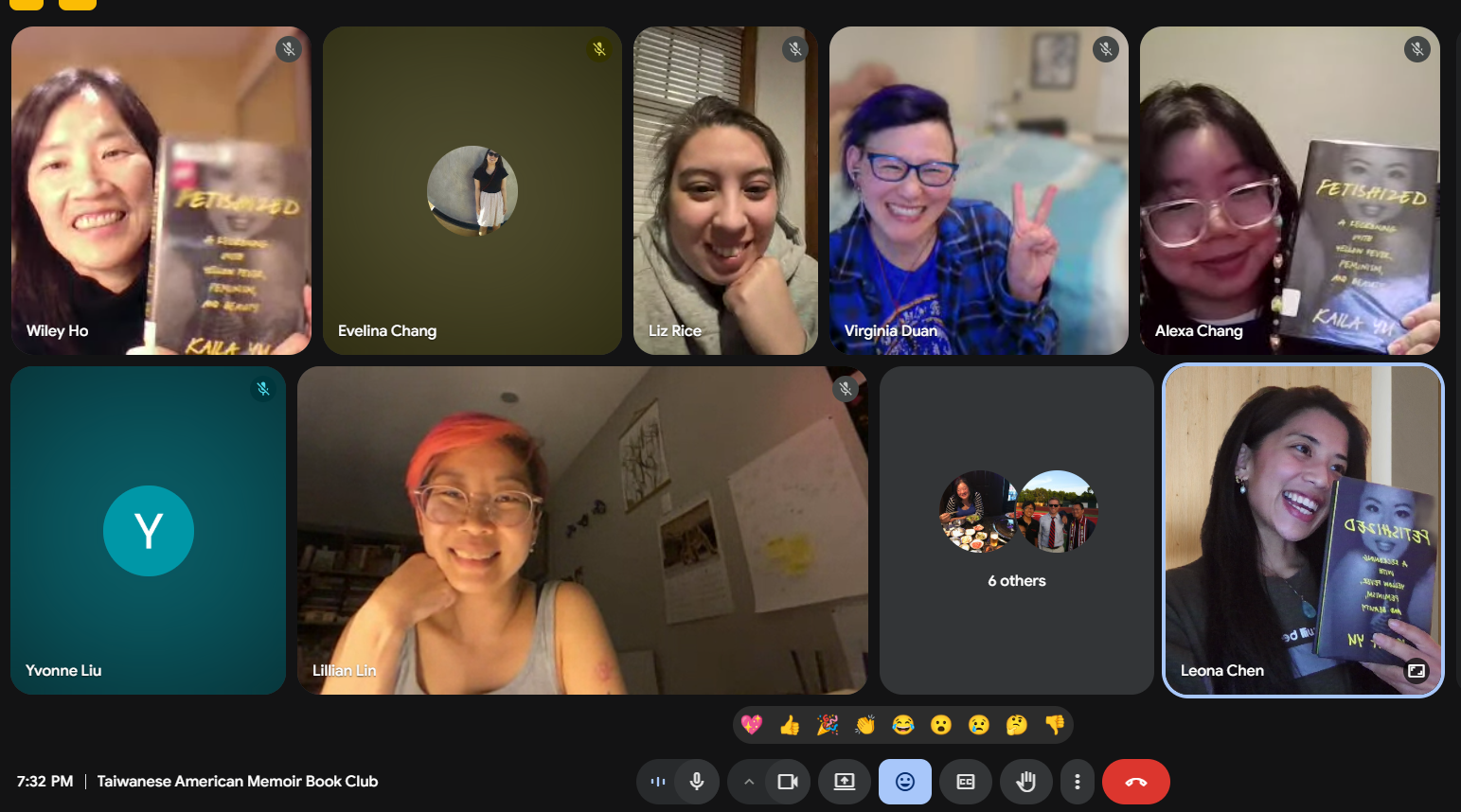
We had such a wonderful, nourishing discussion on January 18 to kick off our 2026 Taiwanese American Memoir Book Club!
Below are questions inspired by our conversation to help spark further discussion/reflection. We encourage you to form your own reading groups to explore these texts in community.
To view our full schedule and RSVP to future discussions, please visit our 2026 Taiwanese American Book Club landing page.
Fetishized: A Reckoning with Yellow Fever, Feminism, and Beauty by Kaila Yu
Blending vulnerable stories from Yu’s life with incisive cultural critique and history, Fetishized is a memoir-in-essays exploring feminism, beauty, yellow fever, and the roles pop culture and colonialism played in shaping pervasive and destructive stereotypes about Asian women and their bodies. Yu reflects on the women in media who influenced her, the legacy of U.S. occupation in shaping Western perceptions of Asian women, her own experiences in the pinup and import modeling industry, auditioning for TV and film roles that perpetuated dehumanizing stereotypes, and touring the world with her band in revealing outfits. She recounts altering her body to conform to Western beauty standards, allowing men to treat her like a sex object, and the emotional toll and trauma of losing her sense of self in the pursuit of the image she thought the world wanted.
Community Discussion & Personal Reflection Guide:
Grounding:
- What references to Kaila’s upbringing (location, era, family dynamics) felt familiar to you, if any? What did you feel distanced from?
- What does this memoir do differently from other Asian American memoirs or narratives you’ve read (in tone, subject matter, framing)?
Objectification & Desirability:
- How does Kaila define or describe “objectification” in Fetishized?
- How does her framing align with or differ from your own understanding or experience?
- How does Kaila characterize “desirability”?
- What were you taught—explicitly or implicitly—about desirability, respectability, or “being a good Taiwanese/Asian” growing up?
- How do these messages function socially?
- Who do they protect, and who do they discipline or control?
Identity & Belonging
- How does Kaila characterize the emotional logic connecting her need for validation to her pursuit of assimilation into American culture?
- Did this logic feel familiar or surprising to you? How so?
- Have you ever felt reduced to a gendered or racialized stereotype?
- How did that experience shape how you saw yourself, or how you behaved or presented yourself?
- How does a lack of vocabulary or recognized examples to name our suffering or experiences affect our sense of agency?
- What changes when your experience finally becomes “understood” by others?
Community, Representation, & Transnational Context
- What does it mean for stories like Kaila’s to exist in Taiwanese American—and broader Asian American—spaces?
- How does this memoir expand or complicate the kinds of stories we assume represent our communities?
- How are these structures—misogyny, beauty standards, racialized desire—legible or experienced in Taiwan?
- What might people who grew up in Taiwan recognize, challenge, or complicate about Kaila’s narration of a Taiwanese American experience?


Leave a Reply