
Prologue
I was born in Taichung, Taiwan, in 1974 under circumstances neither clear nor simple – though I would not understand that for decades. My mother, a radical street-smart woman from an upper class Taiwanese family, married a white Catholic U.S. Air Force airman from Kentucky shortly before my birth. My name carries his lineage, his pride, his promise of a better life in the U.S.
For much of my life, he believed I was his son, and I believed it too.
Four years later, my brother was born. He had our father’s features, mannerisms, and what I perceived as unshakable ease in his identity. We grew up, side by side, under the same roof, same surname, same flag. Somehow, belonging ran deeper than that, and for me, something always tugged at the edges of my reflection.
It was not until my late forties [when] I took a genetic test that the truth surfaced. My biological father was not the man who raised me. He was a Black Creole U.S. military man, stationed in Taiwan before my mother’s marriage. To my knowledge, she never told a soul. My father’s questions never revealed themselves. I was raised by a man who taught me discipline, loyalty, and love, without ever questioning that I may not carry his blood.
The silence was my inheritance.
(1) Discovery
I wore my name like both armor and burden. A name that offered protection and yet exposed me daily to the quiet reminder that I was never quite white, never fully American, too mixed to belong, too “dark” and “American” to be Taiwanese.
My mother’s decision, I now understand, was one of survival. In 1970s Taiwan, where class and race shaped the limits of a woman’s future, she did what she thought was right for me. She married into whiteness, into possibility, and in doing so, she severed me from another inheritance – one rooted in Blackness, diaspora, and Creole resilience.
That fracture would become the map of my life.
(2) Ghosts of Empires
My mother’s silence was not just personal, it was historical. Taiwan has long stood in the shadow of empires. Claimed by the Dutch, the Spanish, the Qing, and the Japanese before Kuomintang, Taiwan has always negotiated identity through occupation.
Like Taiwan, I too, was shaped by external powers and internal negotiations. My face and skin color told one story, my name and passport another. My inner voice tried to reconcile them both.
My grandfather had fought for Japan during World War II, later captured by American soldiers. After the war, as Taiwan transitioned from Japanese to Chinese control, he used his language skills and business acumen to build a factory with U.S. wheat aid and Japanese machinery. It was a symbol of adaptation and survival, an echo of Taiwan itself.
Meanwhile, in the U.S., racial lines hardened. My biological father likely faced those divisions in uniform, his skin both camouflage and target. Black soldiers fought for a nation that offered them limited rights in return. I doubt that he knows I exist. If he left Taiwan unaware, he left his story half written in my DNA.
(3) Becoming
I grew up on military bases, taught to honor the flag and recite loyalty, but there was always a tension, a shadow behind the stripes. My mother whispered stories of Taiwan, of oceans, lychee trees, and stubborn ancestors, but they were fragments, scattered like seashells left in low tide. My stepfather was young, some would say naïve, yet steady and loving. We both avoided the questions we did not know how to ask.
Sometimes, in her quieter moments, my mother spoke of the “mountain people.” She did not know the English word for Indigenous, but her tone carried reverence. Once, she looked at me with soft eyes and said, “your skin…maybe it comes from the mountain people.” At the time, I did not know what she meant, but her words became a quiet echo in my memory, like mist blowing over mountain ranges on the coast.
Taiwan is shaped by both mountains and oceans. Indigenous people of Taiwan took refuge in the mountains, their cultures intact despite centuries of occupation. Meanwhile, the coasts, fertile, contested, fluid, bore the weight of colonization. That contrast stayed with me. The mountain was where people hid to preserve who they were. The ocean was where people left in search of something else.
In my late teens into my early twenties, I found myself caught between those two forces. I began searching for meaning beyond the names and flags I had inherited. I drifted toward other seekers – a motley crew of friends, mixed-race dreamers, disillusioned artists and musicians. Together, we sought answers not from textbooks, but from ceremony, campfires, and stories. We were not searching to escape our own roots, but to understand them. What we found was not doctrine, it was a different kind of consciousness. We learned that identity did not have to be proven through purity. It could be grown through presence. We learned that land remembers, the listening to the stories of the land, and that oceans teach surrender.
One mentor emerged, Sweetwater, an Apache medicine woman and warrior finding her way in retirement from the U.S. Air Force, living on the Florida Gulf Coast. She opened her rural farmland for ceremony, in what she referred to as the Medicine Wheel. Every solstice and equinox, we were welcomed to her land for the Medicine Wheel ceremony, where we would acknowledge, hold awareness, and give thanks to all aspects of existence, the earth, its inhabitants, the sky, sun, moon, and beyond. In time, around campfires, she would share characteristics that she saw in us from her native traditions. When my turn came, she looked at me and said, “You are Mountain, you are reflective, strong, and consistent in your ways.” She explained that in her tradition, we are born with names, and as we find our way through life, names emerge from the choices of who we become and in the behavior of how we navigate the life experience.
In that moment, her words braided into my mother’s, two women, worlds apart, recognizing the same truth. I started to see my own story in those elements. The mountains – solid, hidden, ancestral – was my mother’s voice, whispering of the people who came before colonization. It was about being a place where others can rest. A place that remembers. A place that holds storms and stillness.
Going into my forties, as Black Lives Matter surged and anti-Asian violence made headlines, I felt both mountain and ocean inside me. Grief as still as stone. Rage as fluid as a wave. My identity was not a question of choosing one or the other. It was a learning to hold both.
When I took the genetic test, it did not just confirm ancestry- it confirmed what I had sensed through intuition, racism, dreams, and charged conversations. I was not just the child of a radical Taiwanese woman and white father. I am a child of Black Creole heritage whose roots likely run deep on the Gulf Coast, another coastline carved by violence, resistance, and rhythm.
The mountain was where pieces of me had been hidden. The ocean was where they began to surface.
(4) Reclaiming the Story
For my 50th birthday, I returned to Taiwan with my wife, kids, and my younger brother with his son. Two generations walking our maternal land. My mother’s niece and siblings welcomed us with open arms as we traced her footsteps through the streets of her village in Chiayi, views overlooking the landscape with tastes like memories awakening, walking through the factory of my family’s hard work, my grandfather’s house and the fragrance of furniture I still remember. The ocean was never far, its salty breath lingering in the cracks of every building.
But it was the mountains that called me differently.
We toured the winding roads of Taroko National Park, with an Indigenous guide, and stood on the very spot where in 1542, it is believed the Portuguese named the island, “Ilha Formosa.” Somewhere in the green, grey ridges and the cool thin air, my mother’s quiet remark came back to me: “Your skin…maybe it’s from the mountain people.” She had not known the whole story. But maybe she had always known the truth.
In those mountains, I felt something ancient stir, a recognition not of answers, but of alignment. It did not come from documents or DNA. It came from resonance. My body was a bridge. My story, a song of survival. My identity shaped by erasure, but standing between ocean and mountain, I did not feel split. I felt held.
When I returned to the U.S., I carried that belonging with me. It did not come from certainty. It came from honoring the lineages I could name, and those I could only feel.
Becoming a clinical social worker through my twenties and thirties was a natural step in my life. My work is not about fixing people, but to listen. It is about perspective on narrative. I see my community the way I wished I had been seen, as people living between truths, cultures, wounds, and hopes. My profession became a form of ceremony, a way to heal the fractures I had inherited.
My mother’s radicalism, my stepfather’s discipline, my biological father’s unknown rhythm, they all shaped me. I have the capacity for resilience, to adapt, to imagine. And from the land, the mountains, oceans, and coasts, I am learning to listen.
Now, I practice a different kind of strategy, not one of survival, but of healing and thriving. Rooted in story. In a combination to help others navigate the in-between.
Like Taiwan, I live in tension, caught between powers, histories, languages. But also, like Taiwan, I endure. I resist erasure. I claim complexity as strength.
Epilogue
I write this now as a son, nephew, cousin, brother, husband, and a father. My wife, whose roots trace back to the fjords and forests of Norway, has helped me see that identity is not a narrowing, it is an expansion. Together, we are raising fraternal twins, just a few years older now than I was the last time I stood on Taiwanese soil before returning at fifty.
When I walked those streets again, this time with eyes wide open, I saw everything had shifted yet somehow stayed the same. The streams of bicycles in my childhood have given way to hordes of mopeds. The street vendors with plastic bags of jelly milk tea have evolved into sleek cafes serving artful boba, a new generation’s ritual.
The ocean is still there, rising and receding, calling and retreating. The mountains still stand stoic, and knowing, holding the secrets my mother never said aloud. I felt both elements in my childhood, one contemplative like living stone, the other ever moving like the ocean.
This story, once buried, is now a gift I offer my kids.
They do not carry the silence I did. They carry a song of it, translated, reformed, and lifted into something else. They know they are made from many places, the rice paddies and lychee trees of Taiwan, the bluegrass of Kentucky, the rhythms of Louisiana, the fjords of Norway, and the salt air of Cape Cod where we now live.
And still, they are also something entirely their own.
This story is not an accusation, nor is it an apology. It is an exploration of the shadows we inherit and the truths we must reclaim. It is for those who live in the margins of identity, between nations, races, and the weight of untold stories.
I used to live in the shadow of a flag, defined by lines I did not draw. Now I live in the light of lineage, one that flows like water and stands like rock. One that remembers what the world tries to forget. One that lets my children ride the currents between oceans and mountains, not to escape contradiction, but to become whole within it.
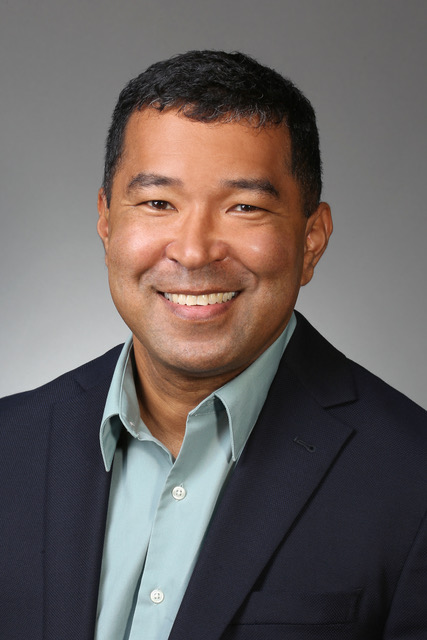
George “Leo” Blandford is a clinical social worker, health equity leader, and cultural strategist whose work spans global humanitarian response, regional policy, and hyperlocal healing. With over two decades of experience—from post-tsunami Sri Lanka to the towns of Outer Cape Cod—Leo works to bridge systems-level strategy with centered community care. As Director of Health Equity & Community Impact at a rural community health center, he fosters collaborative pathways that address structural barriers while uplifting culturally rooted wellness practices. He is committed to diversity, belonging, and place-based justice. Leo’s current focus is a hybrid cultural strategy initiative grounded in rural awareness, narrative change, and intergenerational healing.


Leave a Reply