

As the year comes to an end, families in the U.S. are probably entering a season filled with gatherings, Thanksgiving, Christmas, and everything in between. I imagine it feels a bit like Lunar New Year in Taiwan. I often wonder: when you get together with your family, do you feel closer to them, or somehow even farther away?
My name is Jane. I’m a Taiwanese born and raised, and throughout my life I walked the classic Taiwanese path: school, cram school, more school, getting punished by teachers, strict dress codes, uniforms, university, then a stable job at a big company. It was ultimately the path my parents always hoped I would follow. (Of course, marriage and kids would make it a “perfect 100.”) Growing up, I always felt like I wasn’t allowed to be too different. So for a long time, I hid parts of myself.
During university, I heard that some students could go to the US for a summer work-and-travel program. So after graduating from university, I spent four months working and traveling across the East and West Coasts of the United States. It was the first time I truly felt how diverse a single country could be. In Taiwan, we’re taught not to stand out too much, so that trip planted a small seed in my heart – a desire to explore the world.
When I came back to Taiwan and entered the workforce, I gradually felt like I was losing my own voice. I kept thinking, I’ve been following the path my parents laid out for me my whole life. Maybe it’s time for me to walk my own. I had saved up some money for travel, so I quit my job and bought a one-way ticket to Australia. I still remember my mom saying, “You’re going abroad again? By the time you come back, all your classmates will already be managers, and no company will want to hire you.”
Even though I was terrified inside and afraid her words might come true, I still chose to leave. That decision ended up changing my life completely, and it was also the beginning of my journey as a Mandarin teacher.
During my time in Australia, I lived in a car for a while. I slowly observed that in many Western workplaces, families, and friendships, there was no strong, prescriptive idea of “respecting seniority.” People would also casually say “love you,” something I had rarely heard growing up. It felt like discovering a whole new way families could talk and care for each other. I couldn’t wait to bring this “new way of loving” home and apply it to my own family.
At the time, I was like a child who had discovered a new game and urgently wanted everyone to follow the rules. What I failed to consider was that, within my parents’ cultural background and time period, this way of expressing love wasn’t natural to them.
My dad was born in 1961 in a farming village in Yunlin. He told me that his childhood was extremely poor. They often ate “sweet potato shreds,” sweet potatoes grated and sun-dried on the ground, mixed with dust and sometimes chicken or duck droppings because the animals roamed everywhere. Rice was a luxury. He said that whenever he got sick, my grandma would buy exactly one bowl of rice for him, no more, no less. Poverty wasn’t an idea to him. It was right in front of him, every single day.
These stories only came out slowly, piece by piece, as I grew older and started asking for them. My dad grew up under martial law, speaking Taigi at home while schools enforced Mandarin-only policies. Kids who spoke Taigi were punished. Teachers were strict. He once told me one of his regrets: “I wish I could’ve stayed in school longer, but my teacher beat me until I was terrified.” And with the family struggling financially, the sooner he left school, the better. In that era, expressing feelings, having opinions, or being emotionally open simply wasn’t possible.
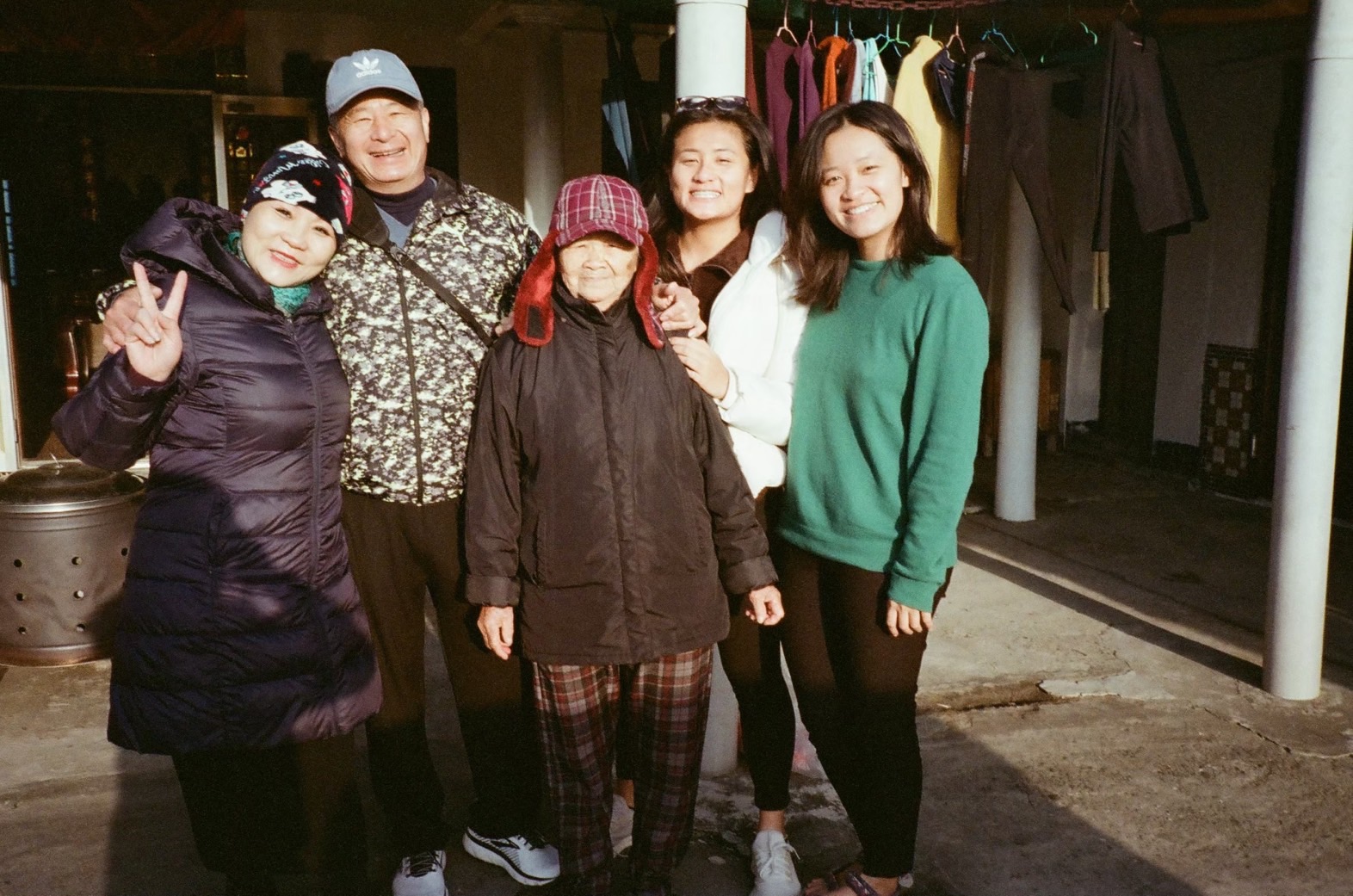
I started by asking them open-ended questions, like “How do you feel today?” But I realized they rarely thought about these questions themselves. So I began to use simpler yes/no or either/or questions: “Do you like this? Don’t like this? Do you prefer A or B?” Bit by bit, I could guide them to explore their own feelings. Over time, I’ve learned to express feelings in a way that makes sense for our family: something gentler, slower, and more aligned with how they were raised.
Understanding the kind of hardship my dad lived through helped me soften, too. It helped me learn how to guide conversations with my parents, how to listen without pushing. I finally understood why he always talked about money, why every topic somehow circled back to it. I used to feel annoyed. But now I get it. When you grow up that close to poverty, financial security becomes a form of safety, and expressing concern for whether I have enough of it is a way of demonstrating concern for me.
Eventually, I shifted from wanting to change their love language to understanding it, carrying with me a blended perspective. Seeing more possibilities didn’t mean I had to choose one way over another. Instead, with a wider lens, I began finding an approach that truly fit us. For my parents, love is bringing home a huge, lavish seafood feast when I visit, even though I barely eat seafood. It’s my dad remembering an offhand comment I made about my balcony being perfect for a lounge chair, and then driving across town to deliver one from home after I had completely forgotten I ever mentioned it.
As a Mandarin teacher, I often meet students who want to learn Mandarin to better understand their Taiwanese family or partner. And over the years, I’ve realized that language learning isn’t just about vocabulary or grammar. It’s not even about translating words from one language to another. To truly understand someone, you have to understand the era that shaped them, the history they lived through, the silence they were raised in, the childhood wounds they carry, and the way they were taught to speak, or not speak.
My partner comes from a completely different cultural background. Now he lives in Taiwan, learning the language and culture, learning the way my parents show love. (It’s definitely not saying “I love you.” It’s driving him to the train station and making sure he’s fed until he can’t move.) Watching him slowly understand these things fills me with so much gratitude. It’s exactly what I hope to do through teaching, not just teaching Mandarin, but helping people truly connect with Taiwan through its language and culture.
In the end, what I’ve learned is this: relationships and communication aren’t just about speaking a common language, but about learning each other’s histories, cultures, habits, and the unique ways we express ourselves. That’s what softens a relationship and brings people closer.
About the Author
Jane Liu is the founder of Jane’s Mandarin and has been teaching Taiwanese Mandarin for five years. With a blended East-West cultural perspective shaped by living and traveling abroad, she specializes in teaching the way Taiwanese people genuinely speak in everyday life, the phrases you hear in night markets, convenience stores, on the street, and around the island. Through language, cultural stories, and real-life expressions, she hopes to help more learners truly understand Taiwan, connect with their loved ones here, and deepen their relationship with Taiwanese culture.


Leave a Reply